Lenten Calendar: Loss

Make no mistake: loss is not a gift. What was lost was a gift, sometimes one that wasn’t appreciated fully until it was lost, which only adds to the anguish.

Every loss is unique to the mourner, and yet the experience of loss is an inevitable part of life in this world.

Lent is a season to acknowledge it as real, to allow grief and regret to wrack us and ultimately, hopefully, to grow in appreciation for all we have been given, whether we still possess it or not. Loss leads easily to fear and defensiveness, but the recognition of the universality of loss can soften our hearts and make healers of the healed.
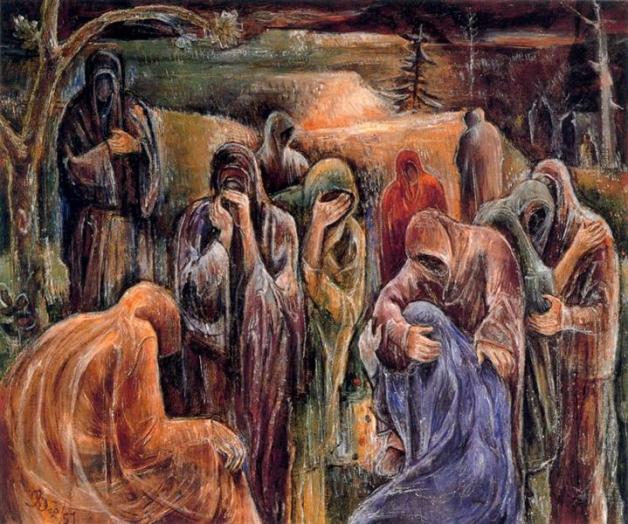
The Grieving Women Albert Bloch

Kindness

Before you know what kindness really is
you must lose things,
feel the future dissolve in a moment
like salt in a weakened broth.
What you held in your hand,
what you counted and carefully saved,
all this must go so you know
how desolate the landscape can be
between the regions of kindness.
How you ride and ride
thinking the bus will never stop,
the passengers eating maize and chicken
will stare out the window forever.

Before you learn the tender gravity of kindness
you must travel where the Indian in a white poncho
lies dead by the side of the road.
You must see how this could be you,
how he too was someone
who journeyed through the night with plans
and the simple breath that kept
him alive.

Before you know kindness as
the deepest thing inside,
you must know sorrow as
the other deepest thing.
You must wake up with sorrow.
You must speak to it till your voice
catches the thread of all sorrows
and you see the size of the cloth.
Then it is only kindness that
makes sense anymore,
only kindness that ties your shoes
and sends you out into the day
to gaze at bread,
only kindness that raises its head
from the crowd of the world to say
It is I you have been looking for,
and then goes with you
everywhere
like a shadow or a friend.

 — Naomi Shihab Nye

Lenten Calendar: Lengthen

Lent comes from the same root as lengthen — as the days are lengthening, as this active fast calls for the lengthening of our souls, the feeding of the hungry and care for others.

If you extend your soul to the hungry
And satisfy the afflicted soul,
Then your light shall dawn in the darkness,
And your darkness shall be as the noonday.
The Lord will guide you continually,
And satisfy your soul in drought,
And strengthen your bones;
You shall be like a watered garden,
And like a spring of water, whose waters do not fail.
Those from among you
Shall build the old waste places;
You shall raise up the foundations of many generations;
And you shall be called the Repairer of the Breach,
The Restorer of Streets to Dwell In.

— Isaiah 58:10-12

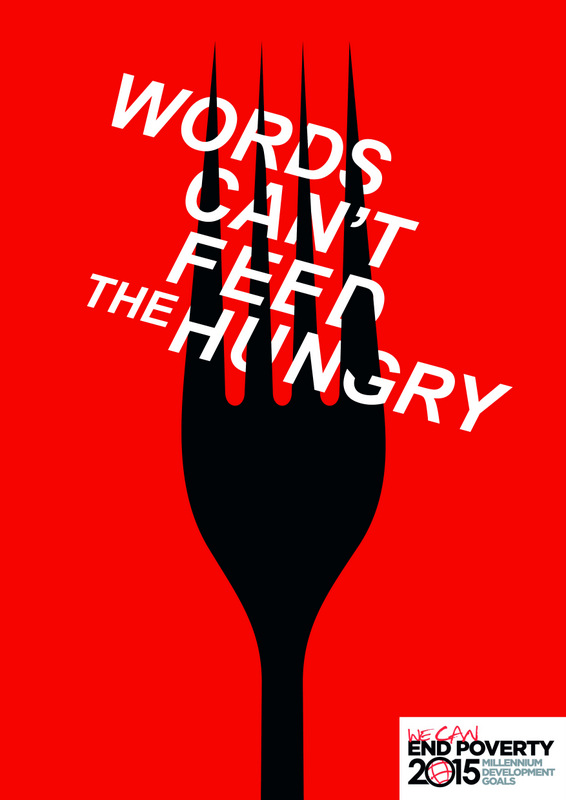
Lent is not about nesting. The nest is made, the eggs have hatched, the child is born, and all these hungry mouths need fed. The focus of this fast is not to eat less, but to “share your bread with the hungry” (Isaiah 58:7). At this time of year, many of us think about how to make do with less, but how will you physically direct the surplus of resources that frees up to those in need?

widelec3

art by Michal Pawlicki

Rather than developing a scarcity mentality, how will you extend yourself to others to demonstrate to them — and yourself — that there is enough?

Lenten Calendar: Hiding

Today’s lectionary psalm is Psalm 32 – a maskil, or contemplative psalm imparting wisdom. It deals in visceral images of the pain and futility of trying to hide our dark secrets from God.

When I kept silent,
    my bones wasted away
    through my groaning all day long.
For day and night
    your hand was heavy on me;
my strength was sapped
    as in the heat of summer.

This oppressive feeling of guilt and shame lifts completely after coming clean with God, but then this psalm we’re supposed to think about and learn from does a funny thing. Just after busting the myth that we can hide from God, it refers to God as a hiding place. Obviously not from God, but from those who would punish us for giving up our pretense and deceit. God’s presence is the safest place to be our whole selves.

La Voix du sang Magritte

La Voix du sang by René Magritte

The lyrics to Our Lady Peace’s “Hiding Place” echo those of the psalm…

Have you seen what I saw
The sky came down from afar?

Have you been there before
That place where hearts’re reborn?

I’m looking for a place to go
I’m waiting on another
Hiding place for hearts

Have you dreamed of a world
Where armor sheaths your bones?

Have you ransomed your soul
To pay for all that you’ve got wrong?

Never give up

… and the video evokes the feelings of danger and safety.


Lenten Calendar: Meek

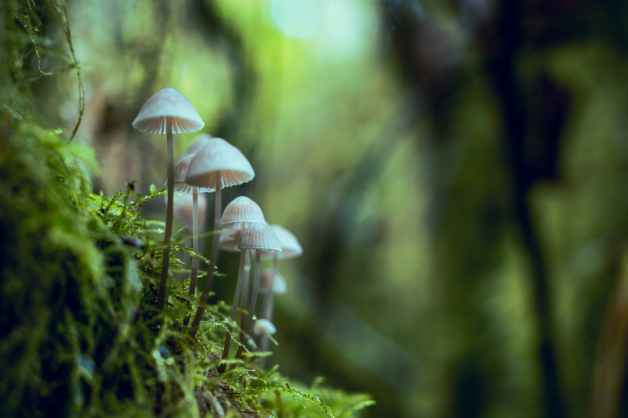
Consider the mushroom, it neither boasts nor vaunts itself above its fellows, and yet it grows in every environment. It knows the power of numbers working humbly and steadily in concert. Individually, they are fragile; together, they are inexorable.

shallow focus photography of mushrooms

Photo by Chris Gonzalez on Pexels.com

Mushrooms

Overnight, very
Whitely, discreetly,
Very quietly

Our toes, our noses
Take hold on the loam,
Acquire the air.

Nobody sees us,
Stops us, betrays us;
The small grains make room.

Soft fists insist on
Heaving the needles,
The leafy bedding,

Even the paving.
Our hammers, our rams,
Earless and eyeless,

Perfectly voiceless,
Widen the crannies,
Shoulder through holes. We

Diet on water,
On crumbs of shadow,
Bland-mannered, asking

Little or nothing.
So many of us!
So many of us!

We are shelves, we are
Tables, we are meek,
We are edible,

Nudgers and shovers
In spite of ourselves.
Our kind multiplies:

We shall by morning
Inherit the earth.
Our foot’s in the door.

— Sylvia Plath