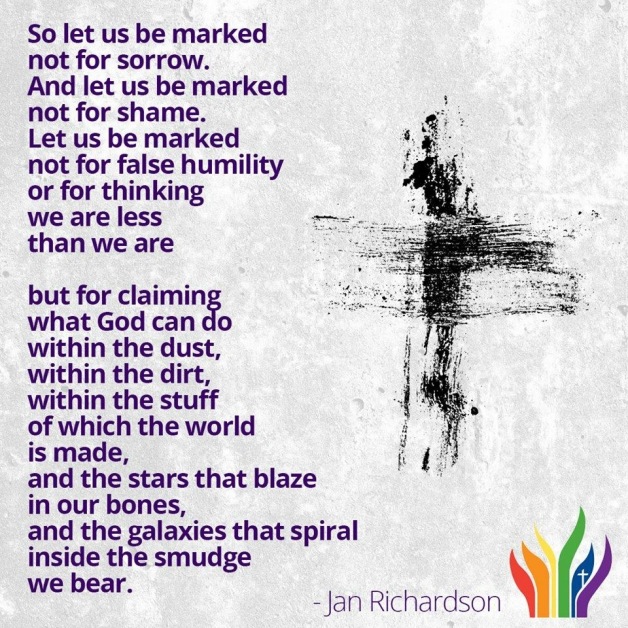
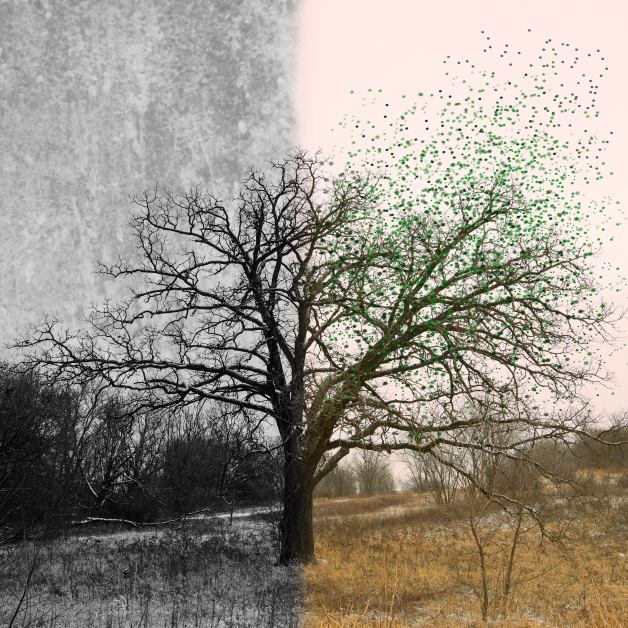
Lenten Calendar: Pray for Peace

Video

Engage in a little audio divina today with Moçnik Damijan’s Ierusalem. Damijan’s text is taken from Psalm 122 – sung in Latin and English – and the names for Jerusalem in multiple languages.

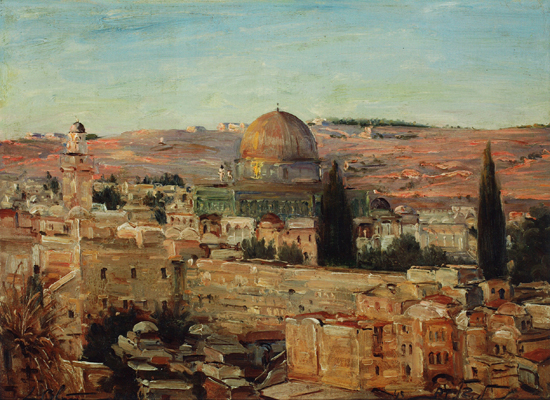
Jerusalem has only rarely, if ever, been a “city of peace,” as its name signifies. It is a prophetic, rather than a descriptive, name. In Luke’s gospel, Jesus “sets his face toward Jerusalem” in chapter 9 and does not arrive until chapter 19; most of his ministry takes place as he journeys toward the cross. Both God and Jesus lament over Jerusalem repeatedly in the Old and New Testament; it represents a place that has a special place in the heart of God, but which has never reached its potential. The prophetic book of Revelation ends in a description of a new “city of peace” in which God’s will is finally done on earth as it is now in heaven.

For what place or city do you feel moved to pray? Pray along with the groans and whispers and cries and melodies of the choir. Pray for its peace and reconciliation and fulfillment and the success of those working to improve the lives of its inhabitants.

blum

Temple Mount and Western Wall by Ludwig Blum

Jerusalem—built as a city
    that is bound firmly together.

Pray for the peace of Jerusalem:

    “May they prosper who love you.
Peace be within your walls,
    and security within your towers.”
For the sake of my relatives and friends
    I will say, “Peace be within you.”
For the sake of the house of the Lord our God,
    I will seek your good.

— Psalm 122:3, 6-9

Lenten Calendar: Unfinished

“So, you’re a background singer in your own life?

Why’re you in the background?

You gotta let the lies go

and let your hope grow.”

Kim B. Miller, “Lies”

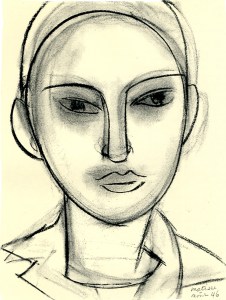
Face (Claude) Henri Matisse

Face (Claude) – Henri Matisse

I find a lot of hope in being unfinished — a work in progress. When things aren’t working out as planned, well, the story isn’t over yet. It helps me extend grace to others, but especially myself — there’s less pressure to be perfect or have it all figured out.

Sometimes I have to ask myself, though, why is that part of my life or myself so underdeveloped? Why is it just roughed in? A sketch I’m in no hurry to finish? What fears and lies are keeping me from committing the time and focus it would take to fill in the features? It’s safer to be all potential, even if that means squandering it, but God has hopes, dreams, plans, and work for our completed selves. What is one step toward that future self you’ve been avoiding for fear of mistakes? What if we accepted the possibility of imperfection along the way to being made perfect?

Lenten Calendar: Loss

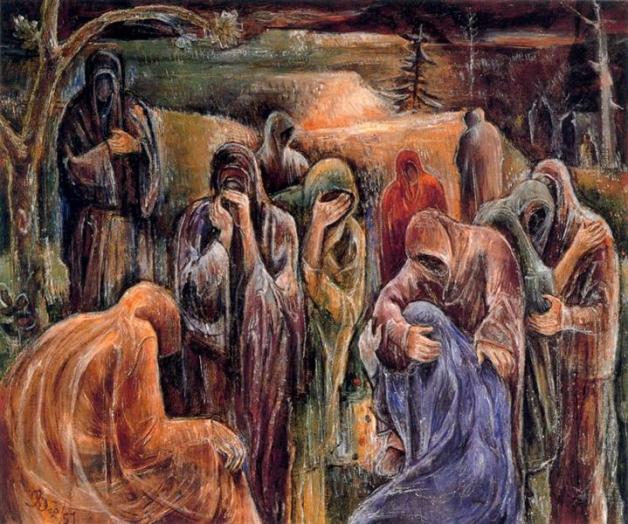
Make no mistake: loss is not a gift. What was lost was a gift, sometimes one that wasn’t appreciated fully until it was lost, which only adds to the anguish.

Every loss is unique to the mourner, and yet the experience of loss is an inevitable part of life in this world.

Lent is a season to acknowledge it as real, to allow grief and regret to wrack us and ultimately, hopefully, to grow in appreciation for all we have been given, whether we still possess it or not. Loss leads easily to fear and defensiveness, but the recognition of the universality of loss can soften our hearts and make healers of the healed.

The Grieving Women Albert Bloch

Kindness

Before you know what kindness really is
you must lose things,
feel the future dissolve in a moment
like salt in a weakened broth.
What you held in your hand,
what you counted and carefully saved,
all this must go so you know
how desolate the landscape can be
between the regions of kindness.
How you ride and ride
thinking the bus will never stop,
the passengers eating maize and chicken
will stare out the window forever.

Before you learn the tender gravity of kindness
you must travel where the Indian in a white poncho
lies dead by the side of the road.
You must see how this could be you,
how he too was someone
who journeyed through the night with plans
and the simple breath that kept
him alive.

Before you know kindness as
the deepest thing inside,
you must know sorrow as
the other deepest thing.
You must wake up with sorrow.
You must speak to it till your voice
catches the thread of all sorrows
and you see the size of the cloth.
Then it is only kindness that
makes sense anymore,
only kindness that ties your shoes
and sends you out into the day
to gaze at bread,
only kindness that raises its head
from the crowd of the world to say
It is I you have been looking for,
and then goes with you
everywhere
like a shadow or a friend.

 — Naomi Shihab Nye

Lenten Calendar: Lengthen

Lent comes from the same root as lengthen — as the days are lengthening, as this active fast calls for the lengthening of our souls, the feeding of the hungry and care for others.

If you extend your soul to the hungry
And satisfy the afflicted soul,
Then your light shall dawn in the darkness,
And your darkness shall be as the noonday.
The Lord will guide you continually,
And satisfy your soul in drought,
And strengthen your bones;
You shall be like a watered garden,
And like a spring of water, whose waters do not fail.
Those from among you
Shall build the old waste places;
You shall raise up the foundations of many generations;
And you shall be called the Repairer of the Breach,
The Restorer of Streets to Dwell In.

— Isaiah 58:10-12

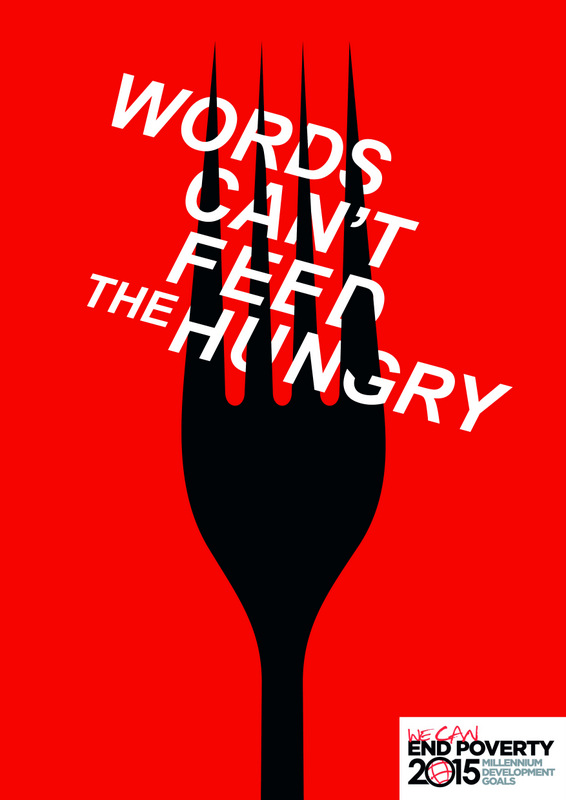
Lent is not about nesting. The nest is made, the eggs have hatched, the child is born, and all these hungry mouths need fed. The focus of this fast is not to eat less, but to “share your bread with the hungry” (Isaiah 58:7). At this time of year, many of us think about how to make do with less, but how will you physically direct the surplus of resources that frees up to those in need?

widelec3

art by Michal Pawlicki

Rather than developing a scarcity mentality, how will you extend yourself to others to demonstrate to them — and yourself — that there is enough?

Lenten Calendar: Hiding

Today’s lectionary psalm is Psalm 32 – a maskil, or contemplative psalm imparting wisdom. It deals in visceral images of the pain and futility of trying to hide our dark secrets from God.

When I kept silent,
    my bones wasted away
    through my groaning all day long.
For day and night
    your hand was heavy on me;
my strength was sapped
    as in the heat of summer.

This oppressive feeling of guilt and shame lifts completely after coming clean with God, but then this psalm we’re supposed to think about and learn from does a funny thing. Just after busting the myth that we can hide from God, it refers to God as a hiding place. Obviously not from God, but from those who would punish us for giving up our pretense and deceit. God’s presence is the safest place to be our whole selves.

La Voix du sang Magritte

La Voix du sang by René Magritte

The lyrics to Our Lady Peace’s “Hiding Place” echo those of the psalm…

Have you seen what I saw
The sky came down from afar?

Have you been there before
That place where hearts’re reborn?

I’m looking for a place to go
I’m waiting on another
Hiding place for hearts

Have you dreamed of a world
Where armor sheaths your bones?

Have you ransomed your soul
To pay for all that you’ve got wrong?

Never give up

… and the video evokes the feelings of danger and safety.


Lenten Calendar: Meek

Consider the mushroom, it neither boasts nor vaunts itself above its fellows, and yet it grows in every environment. It knows the power of numbers working humbly and steadily in concert. Individually, they are fragile; together, they are inexorable.

shallow focus photography of mushrooms

Photo by Chris Gonzalez on Pexels.com

Mushrooms

Overnight, very
Whitely, discreetly,
Very quietly

Our toes, our noses
Take hold on the loam,
Acquire the air.

Nobody sees us,
Stops us, betrays us;
The small grains make room.

Soft fists insist on
Heaving the needles,
The leafy bedding,

Even the paving.
Our hammers, our rams,
Earless and eyeless,

Perfectly voiceless,
Widen the crannies,
Shoulder through holes. We

Diet on water,
On crumbs of shadow,
Bland-mannered, asking

Little or nothing.
So many of us!
So many of us!

We are shelves, we are
Tables, we are meek,
We are edible,

Nudgers and shovers
In spite of ourselves.
Our kind multiplies:

We shall by morning
Inherit the earth.
Our foot’s in the door.

— Sylvia Plath


Lenten Calendar: Change

Most of us — if we’re honest — will admit that we resist change, even if we like the idea of it. We may delight in newness, have a penchant for novelty, welcome distraction, or coolly ride out circumstances, but that doesn’t mean we want anything to shift within ourselves on a profound level.

Lent is an apt season for reflecting on the things in our lives that want to move, that cannot or should not remain the same. A gift that needs to grow, priorities desperate to realign, bits of our psyche we’ve worried so much that they’re raw or calloused and need to be left alone to heal.

Tracy Chapman’s song “Change” asks all the right questions — questions we can only safely ask ourselves in the presence of a God of love.

2020-02-29 (2)

“If everything you think you know
Makes your life unbearable
Would you change?”

“If not for the good why risk falling?”

“If you’d broken every rule and vow
And hard times come to bring you down
Would you change?”

“Are you so upright you can’t be bent
If it comes to blows?”

“If you knew that you would find a truth
That brings a pain that can’t be soothed
Would you change?”

Lenten Calendar: Wounds

“If someone asks, ‘What are these wounds on your body?’ they will answer, ‘The wounds I was given at the house of my friends.’” – Zechariah 13:6

I knew a woman with a wound that had never healed. She came from Kosovo. Ten years before I met her she’d had a procedure to drain a lung her tuberculosis was filling up fast, and the gaping hole it left in her side never closed up. She was perfectly capable of everyday activities, but it affected her whole life. She was beautiful and intelligent, with a mix of stoicism and cheerfulness prized in her culture, but she never married. All her friends and siblings did, including a brother who had suffered a head injury as a child that left him wall-eyed and slow. He had a dozen healthy children and a grandchild on the way. She had a wound that told the story of her life.

Even those of us with wounds that have healed know that every scar has a story. They are mementos of reckless childhoods, of moments in which we forgot our own strength or limitations, of burst appendices, of giving birth. They are physical records of our lives that we carry around on our bodies.

Seattle artist Paul Tonnes has a major abdominal scar from a surgery he was too young to remember to correct a condition he was too young to recall having, and yet his body reminds him. The printed canvases in his series Wounds have all been slashed and stitched together in such a way that the violence done is still visible, even palpable, but the damage is being held together in hopes of healing. The Wounds do not depict the violence – no indication is given of the source of these wounds – as much as the healing process. The palette of the pieces is bold, mottled, and reminiscent of bruising. The stitching is roughly done with twine, utilitarian knots and autopsy needles, some of which still dangle from the canvas as if to acknowledge the work left to be done; others remain worked into the canvas itself as if they are an integral part of the work.
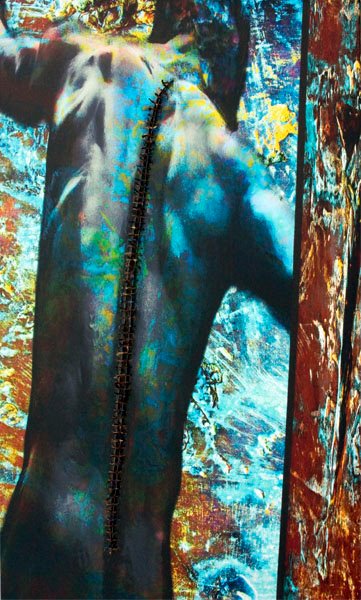
wounds tonnes

art by Paul Tonnes

Some of the wounds seem old or even postmortem. Did the youthful immortal, sculpted of marble and sporting a Y-incision, suffer from internal injuries? Was cracking his perfect chest the only way to see them? Were they visible even then? One woman’s wounds seem to serve as points of connection to the world around her, as much as sources of pain. Her wounds seem smaller than the others, more like stings. Other wounds are still open and raw, but no blood and guts pour out of them. The openness is a void, a space for healing. Or maybe those are the cracks that Leonard Cohen recognized were present in everything because “that’s how the light gets in.”

Not all the wounds are on the figure’s person. Some are environmental, but the tension of them is felt in the musculature of the Davidic torso and the amorphous body reminiscent of Michelangelo’s Four Prisoners; the poorly sewn gash in the canvas suggests the damaged surroundings in which he’s struggling for the freedom to be fully formed. An Atlas-like figure bends under a burden with a tightly stitched seam. As the artist noted, if the stone had not been repaired, our beleaguered titan would have had half as much to carry, but someone somehow took the trouble to make the burden itself whole. Who does that?

The physicality of these ruptured canvases reminds me of the physicality of Lent. Lent is a time many of us seek to identify and break the physical habits that inhibit our spiritual lives or establish new habits that reconcile our physical and spiritual lives. Sometimes we subject ourselves to things at Lent because we want to get our heads around the harrowing reality of our sins and of Christ’s sacrificial journey to Jerusalem to put them to death in his own body. We suffer graphic and gut-wrenching depictions of the Passion and exactly what happens when a nail is driven through a human hand. We imagine ourselves suffocating. We are people with a violent and physical story. These canvases bring me back to the healing beauty of the cross and the wounds of Christ that are our wounds. Some of these wounds are fresh and raw. Some are emotional scars with stories that have shaped our stories and where we see ourselves in the story of salvation.

Tonnes offers powerful images to sit with during Lent as we consider the violence done to and around us, as we confess and repent of the violence we’ve done, as we present our wounded bodies and souls to the One who offers healing, and as we cultivate the disciplines that will help us continue to do so all year long. Any one of them could be read as a Christ figure. Any one of them could be any one of us.

Paul Tonnes is a Seattle artist working in the mixed media realms of digital manipulation, print, and encaustic. His series “Wounds” consisting of cut and stitched canvases explores the human body’s potential for healing. You can see more of his profound work at paultonnes.com
 

Lenten Calendar: Ash Wednesday

jan richardson ash wednesday

The imposition of ashes. Most of us don’t relish any kind of imposition, so what brings us out on a school night to rub dirt on each other’s foreheads? What kind of season kicks off with people lining up to be reminded of their own mortality? A rather grim one, you’d expect. But Lent turns morbidity on its head and makes it an invitation into life. Lent begins where we end, but ends with the death of death.

Ash Wednesday is an in your face, on your face, square between the eyes reminder that we’re all going to die, so let’s stop wasting life being anything less than God made us to be. Also, we’re dust, so let’s not feel any pressure to be anything more than God us to be, either. Accepting that our days are numbered teaches us to number our days and so gain a heart of wisdom. Life is precious in its finitude and we live it better when we are mindful of what we are spending it on.

Many of our modern fasts take into account that time is a limited resource. What practice would you like to build into or moderate or remove from your life to make the most of your time?


Lenten Calendar: Another Season, Another Fast

Julie Elfers Winter to Spring

art by Julie Elfers

I’ve blogged a few of years of Advent reflections, but Lent calls for a different kind of pace and energy that I’m just now trying to summon and articulate for the first time.

Both Advent and Lent are fasts, designated times of preparation that allow us to better celebrate the feasts of Christmas and Easter. Both seasons are quiet, but Advent mirrors the deepening stillness of winter’s approach, where Lent channels the subterranean stirrings of early spring.

Advent is lament, crying out in our need and powerlessness as the darkness deepens around us. Lent is repentance, throwing off every self-imposed impediment so we can walk in freedom and power in the light, The discipline of Advent is to cultivate hope in spite of the darkness around us. The discipline of Lent is to spite the darkness within and share the hope that is also within us.

During Advent we meditate on the wonder of God coming to be human as we are: small and vulnerable. During Lent we follow Jesus in his earthly ministry, striving to become human as he is: whole and restoring others to wholeness.

In Advent we fall to our knees in anticipation of a blessing and receive the gift of a savior. In Lent we rise to our feet to be a blessing and learn to give sacrificially in the model of the Savior.

Advent is dwelling on the promise of Isaiah 9:6; it’s a call to wait on the Lord. Lent is embracing the exhortation of Isaiah 58:6; it’s a call to action.

Each of the 40 days of Lent I will try to post a little something to get us moving. A song, a poem, an article, a study, a wandering exploration, a quote…. We’ll see. I have no overarching plan beyond the grand tradition of the disciples – just praying to be able to keep up as Jesus quickens his pace toward Jerusalem.