“The word is very near to you…”

“Near and Far” by Jamie Heiden
“Nothing is Far” by Robert Francis
“The word is very near to you…”

“Near and Far” by Jamie Heiden
“Nothing is Far” by Robert Francis

“Seven Ages: The Walking Figure” by Ghislaine Howard
“Down these mean streets a man must go who is not himself mean, who is neither tarnished nor afraid.” – Raymond Chandler [1]
“To be a witness does not consist in engaging in propaganda nor even in stirring people up, but in being a living mystery. It means to live in such a way that one’s life would not make sense if God did not exist.” – Cardinal Suhard [2]
Raymond Chandler’s walker of the mean streets epitomizes incarnation. Completely common and yet unusually honorable, this figure speaks the language of the age and acts as an agent of redemption. Cardinal Suhard’s witness, on the other hand, seems more steeped in the incense of holy mystery. Inexplicable and yet attractive, the witness calls us away from the world as we know it. For the Christian Church, Jesus Christ represents both the walker and the witness. In our accounts of him, he navigates the complexity between these two seemingly conflicting roles so gracefully and yet we agonize: How did he do it? How do we do it? There is no question that the reality of Jesus Christ can and should transform our human cultures, but how? Arguments for the creation of a separate Christian culture do not resonate with our accounts of a Savior who lived and died and lives for the sake of the world He so loves. Christ calls the Church to live as a faithful community of communities that, like Christ, transcends and critiques, but most critically participates in human cultures for the good of all. The Church distinguishes itself from the world-at-large by offering a unique understanding of reality that changes lives, not Christian knock-offs of worldly goods and services. Intentionally forging an exclusionary culture negates our human and God-given identities. While making too small a distinction between ourselves as the Church and our wider cultures is fatal, making too large a distinction is absurd. God sets us in human as well as spiritual families; sometimes we’re called to leave them for the sake of the gospel, but not because it is us versus them. God calls the Church
to be the bearer of God’s saving purpose for his whole world…. It means that this particular body of people who bear the name of Jesus through history… with all its contingency and particularity, is the body which has the responsibility of bearing the secret of God’s reign through world history.[3]
Our charge is unique, but we tend to claim things, such as God’s affection and attention, for ourselves that properly belong to all of creation. God’s incarnational economy requires us to root and ground ourselves not only in God’s love, but also in the cultures to which God wants to reveal divine love.
We the Church must not shun such grounding for fear of contamination. Rather we should broaden and deepen our personal and corporate cultural experiences so we’re better educated to critique our cultures and better equipped to understand our alternatives for living godly lives within them. Otherwise we do damage by talking about the world as we fear it may be rather than addressing the world as it is. We don’t merely absorb our cultures indiscriminately, however; we follow Christ’s example in embracing our identities as cultural beings and transforming the times and places in which we find ourselves from the inside. Christ remains our best model and representative in our relationships to our cultures. Christ loves and communicates to cultures through the Church and the Church should love and communicate to cultures through Christ. Jaroslav Pelikan points out that
as respect for the organized church has declined, reverence for Jesus has grown…. There is more in him than is dreamt of in the philosophy and Christology of the theologians. Within the church, but also far beyond its walls, his person and message are, in the phrase of Augustine, a ‘beauty ever ancient, ever new,’ and now he belongs to the world.[4]
Christ neither feared nor feared for the world; rather he took up residence in it and sacrificed his life for the good of all of us in it to the glory of God. He instructs his body on earth to walk as witnesses in the world, communicating, displaying and verifying in our daily lives this gospel, this reality that has taken hold of us. We do so by living deeply, freely, and abundantly into our cultures following the standard and example of Jesus. In order to do so, we will all find it necessary to reject some key assumptions of our cultures. In Jesus’s day those false assumptions included God’s favoritism for Israel, the rich, and the religious. In my place and time they include false assumptions of the inherent goodness of radical individualism and rampant consumerism that define success in life as getting what’s “mine.”
The plain fact is that the planet does not need more “successful” people. But it does desperately need more peacemakers, healers, restorers, storytellers, and lovers of every shape and form. It needs people who live well in their places. It needs people of moral courage willing to join the fight to make the world habitable and humane. And these needs have little to do with success as our culture has defined it.[5]
The world around us poses all kinds of pressing and complex questions. We cannot assume they are all the wrong ones, that they don’t apply to us, or that we have all the answers at our disposal ready-made. Along with the danger of dismissing honest inquiry, we risk missing God’s direction; we must remain open to the possibility of God guiding and teaching us through present cultural situations. God has invited us to be part of the process of Christ becoming all in all. When we approach all the times and places and dilemmas we find ourselves in with this staggering invitation in mind we become agents of redemption in the here and now. We will know God’s goodness in the land of the living.
“Sing redemption everywhere you go.”
[1] Raymond Chandler, “The Simple Art of Murder” http://www.en.utexas.edu/amlit/amlitprivate/scans/chandlerart.html (accessed June 17, 2011).
[2] Emmanuel, Cardinal Suhard, qtd. in Madeleine L’Engle, Walking on Water: Reflections on Faith and Art, Commemorative Edition (Wheaton, Ill.: Harold Shaw Publishers, 1998), 34.
[3] Lesslie Newbigin, The Gospel in a Pluralist Society, 86-87.
[4] Jaroslav Pelikan, Jesus Through the Centuries: His Place in the History of Culture (New Haven: Yale University Press, 1999), 232-233.
[5] David Orr, “What is Education For?” In Context 27 (Winter 1991): 52.
[6] Stanley Hauerwas and William H. Willimon, Where Resident Aliens Live, 100.
[7] Philippians 3:
[8] Jeremiah 29:7
[9] Gregory Wolfe, “The Four Cultures,” Image no. 58 (2008), http://imagejournal.org/page/journal/editorial-statements/the-four-cultures (accessed January 31, 2013).
[10] Anthony Ugolnik, “Whose Crisis of Faith? Culture, Faith, and the American Academy” in The Two Cities of God: The Church’s Responsibility for the Earthly City, ed. Carl E. Braaten and Robert W. Jenson (Grand Rapids: William B. Eerdmans Publishing Co., 1997), 92.

Andrew Greeley,
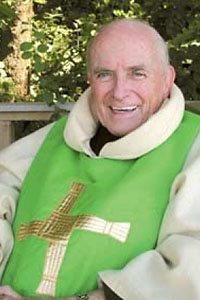
self-proclaimed “loud-mouthed Irish priest”
On the Relationship between Religion and Imagination
The imagination is religious. Religion is imaginative. The origins and the power of both are in the playful, creative, dancing self.
On the Uniqueness of the Catholic Imagination
A word about the Catholic imagination: Unlike the other religions of Yahweh, Catholicism has always stood for the accessibility of God in the world. God is more like the world than unlike it.
(The Catholic Imagination of Bruce Springsteen)
The objects, events, and persons of ordinary existence hint at the nature of God and indeed make God in some fashion present to us. God is sufficiently like creation that creation not only tells us something about God but, by so doing, also makes God present among us.
(The Catholic Imagination p. 6)
Catholics live in an enchanted world, a world of statues and holy water, stained glass and votive candles, saints and religious medals, rosary beads and holy pictures. But these Catholic paraphernalia are mere hints of a deeper and more pervasive religious sensibility which inclines Catholics to see the Holy lurking in creation. As Catholics, we find our houses and our world haunted by a sense that the objects, events, and persons of daily life are revelations of grace….
This special Catholic imagination can appropriately be called sacramental. It sees created reality as a ‘sacrament,’ that is, a revelation of the presence of God.
(The Catholic Imagination p. 1)
On Stories and Doctrine
Religion begins in the imagination and in stories, but it cannot remain there. The stories which are our first contact with religion… are subject to rational and critical examination as we grow older to discover both what they mean and whether we are still able to believe them. Bethlehem becomes the Incarnation. The empty tomb becomes the Resurrection. The final supper becomes the Eucharist. These are all necessary and praise-worthy developments. Nonetheless, the origins and raw power of religion are at the imaginative (that is, experiential and narrative) level both for the individual and for the tradition. The doctrine of the Incarnation has less appeal to the whole self than does the picture of the Madonna and Child in a cave. The doctrine of the Resurrection has less appeal to the total human personality than do the excited women and the awestruck disciples on the road to Emmaus that first day of the week. The doctrine of the Real Presence is less powerful than the image of the final meal in the upper room. None of the doctrines is less true than the stories. Indeed, they have the merit of being more precise, more carefully thought out, more ready for defense and explanation. But they are not where religion or religious faith starts, nor in truth where it ends.
(The Catholic Imagination p. 4)
On Lyrics, Liturgy, and Witness
So if the troubadour’s symbols are only implicitly Catholic (and perhaps not altogether consciously so) and if many folks will not understand them or perceive their origins, what good are they to the Catholic Church? Surely they will not increase Sunday collections or win converts or improve the church’s public image. Or win consent to the pastoral letter on economics.
But those are only issues if you assume that people exist to serve the church. If, on the other hand, you assume that the church exists to serve people by bringing a message of hope and renewal, of light and water and rebirth, to a world steeped in tragedy and sin, you rejoice that such a troubadour sings stories that maybe even he does not know are Catholic….
Those Catholics who speak to the meaning of life out of the (perhaps) unselfconscious images of their Catholic heritage have a more profound claim to be liturgists than diocesan liturgical directors, for example, who gather to devise ways to use the liturgy to brainwash the laity into accepting the social action views of those who draft pastorals. (I do not know whether the assumption that this can be done is more hilarious than the attempt to do so is obscene.) The Catholic minstrels, such as these may be, are the true sacrament-makers because they revive and renew the fundamental religious metaphors. We must treasure them rather than ignore or denounce them. Or impugn their motives.
(The Catholic Imagination of Bruce Springsteen)
– Andrew Greeley, February 5, 1928 – May 29, 2013
Most reflective congregations will already be aware of the dividing walls between those settled in “traditional” families and those who are not. Do we want to religiously observe a day that builds up those walls or one that breaks them down and builds us all up together? I believe the Church does her best work when we regard one another primarily as brothers and sisters and act together as children of God. The Church is the family into which God has set each one of us. How might some different approaches to Mother’s Day establish rather than undermine that truth in our midst? Motherhood is one role/ ministry/ calling among many. As such, it should be honored within the Church, but not above or at the expense of other roles, ministries, and callings. How might we affirm, support, and challenge each other on Mother’s Day?
1. Skip it.
Everyone knows that it’s Mother’s Day. Multiple industries are working day and night to ensure this is known. Honoring mothers is a fine thing (honoring one another at any time is a fine thing), but churches are in no way required to drop everything to issue a statement on the subject of motherhood this morning in particular. This can be an emotionally charged day for people, but it is not a national crisis and needn’t override regularly scheduled programming.
Being asked to stand is not such a significant a form of recognition that anyone with a mother’s heart wouldn’t willingly give it up to spare her single-and-hating-it sister pain. None of us wants to win a potted plant for having the most children if it means another woman in the room is forced to wonder if her miscarried or stillborn or aborted or adopted out children “count.” Does she still “have” the child if he died or disowned her or if her parental or custodial rights were terminated? No one needs an African violet that badly.
Allow the congregation to relate to one another organically and appropriately during the natural times of greeting before, during, and after the service. Trust that your people will recognize and rejoice with any woman in your midst beaming with a pregnancy-rounded glow, or distracted by devotion to her newborn, or visibly chuffed in the company of her adult children who don’t normally join her in the pews. By not directing these times the congregation will also have the freedom to support the women around them for whom this day represents loss, whether that’s through a hug in silent acknowledgement of a mother’s recent passing or a more private grief, or by checking in with offers of practical support for those caring for mothers who are fading away, or by directing the conversation toward rousing speculation about the NBA draft because this marks another year that this day must simply be borne, and not celebrated.

If the fancy hat brigade asks why you “skipped” Mother’s Day, tell them. They’re moms. They’ll understand
2. Address it.
Just know that it can’t be a one-size-fits-all gloss. Build language into your corporate prayer time in the service that contends with the struggles of the day as well as the joys. There is an excellent example here along with some potentially relevant editorial suggestions immediately following in the comments section and a lovely follow-up here.
As a matter of personal taste, I would reframe it as a prayer rather than a message, as a time of coming before God as one people with all these experiences. But then, I like to think that everyone in the church already knows they’re welcome there. If you preceive the message that we are all in this together needs to be heard, say it loud and clear.
3. Preach it.
But please, no sermons about following Jesus while raising children, especially if it’s romanticized as some greatest calling, and even if it’s gritty as all get out. As gratifying as it can be to hear someone publicly recognize the difficulty of maintaining a spiritual life while housebreaking small humans, I reckon doctors have to pray while surrounded by others’ bodily fluids as much or more than most mothers, and I know my friends in customer service and corporate America get pooped on more times in a week than I do. What other week of the year – besides Father’s Day, of course – do we choose to preach to a fraction of the congregation? If there are any families in your church you probably have better and more meaningful ways of supporting them that aren’t potentially heart-rending to the rest of your congregants. I don’t need my church to honor me for my fertility, especially when dear friends who I know to the core of my being would make better mothers than I am are struggling to conceive or adopt. I don’t want to be honored as a mother on general principle by someone who, chances are, has no idea how I’ve interacted with my kids over the last week. Give me an exhortingly honest contingent of other parents and friends privy to the sordid details over hollow praise any day. Parents need more support than an annual sermon, and non-parents need to know they are integral to the life of the church every week of the year.
If you choose to preach a Mother’s Day sermon, preach about the inconvenient and unifying fact that we all have mothers and talk about the work of relating to our universally messed-up families of origin in all their weird permutations and uncannily entrenched patterns. Preach the texts in which God longs to mother us, gathering us up, teaching us to walk, modeling flight and catching us when we fall, then tie in the physical impossibility of forgetting the children one has borne. Help us all see God as a loving mama with our names tattooed on her hands, who will always get a little misty-eyed thinking of us when we’re far away, even if it’s because we’re in juvie or run-off with a bad crowd. Who always has a room for us even when we call her names and can’t make the token $100 she charges us in rent. Who swells with pride for our every little achievement even when we have convinced ourselves we have done well in spite of our upbringing. If your congregation is into carnations give everyone a red one on the way out as a reminder that we all have a loving and living Mother who would rather die than see us hurt.
4. Re-radicalize it.
Mother’s Day in America only goes back a hundred years or so, and most of its early supporters envisioned a day that had more to do with community organizing and peace-making than with thanking women for having children. When it became a national holiday it was to honor women who had lost children to war. “Decorative” clay handprints and poorly executed breakfasts in bed were not the original intent. What if Mother’s Day became a rallying cry for fighting for everyone’s children? Revving up the fierce side of our collective maternal instinct and living into that day when war will no longer be taught by declaring that day begins now? Something along the lines of Julia Ward Howe’s Mother’s Day Proclamation?
Despite the assumptions of physical force, the mother has a sacred and commanding word to say to the sons who owe their life to her suffering. That word should now be heard, and answered to as never before.
Arise, then, Christian women of this day! Arise, all women who have hearts whether your baptism be that of water or of tears! Say firmly: We will not have great questions decided by irrelevant agencies. Our husbands shall not come to us, reeking with carnage, for carresses and applause. Our sons shall not be taken from us to unlearn all that we have been able to teach them of charity, mercy and patience. We, women of one country, will be too tender of those of another country, to allow our sons to be trained to injure theirs.
Identify the social ill that breaks the hearts of your congregants and go at it like a mother protecting her young. Unleash your church’s inner mama bear on planning a clothes drive or activity for foster kids. Fund additional shelter beds in your town because everybody’s somebody’s baby. Scour the local middle school bathroom stalls and desks of cell numbers to call for a good time.
Mother’s Day was originally a day to mourn with those who mourn, but it is so much easier to rejoice with those who rejoice. How do we do both? What is your church doing for Mother’s Day? What ideas do you have?

“…Grace calls out, ‘You are not just a disillusioned old man who may die soon, a middle-aged woman stuck in a job and desperately wanting to get out, a young person feeling the fire in the belly begin to grow cold. You may be insecure, inadequate, mistaken or potbellied. Death, panic, depression, and disillusionment may be near you. But you are not just that. You are accepted.’ Never confuse your perception of yourself with the mystery that you really are accepted.” [The Ragamuffin Gospel]
“The greatest single cause of atheism in the world today is Christians: who acknowledge Jesus with their lips, walk out the door, and deny Him by their lifestyle. That is what an unbelieving world simply finds unbelievable.” [intro track to War of Ages album Fire from the Tomb]
“In a futile attempt to erase our past, we deprive the community of our healing gift. If we conceal our wounds out of fear and shame, our inner darkness can neither be illuminated nor become a light for others.” [Abba’s Child]
“When I get honest, I admit I am a bundle of paradoxes. I believe and I doubt, I hope and get discouraged, I love and I hate, I feel bad about feeling good, I feel guilty about not feeling guilty. I am trusting and suspicious. I am honest and I still play games. Aristotle said I am a rational animal; I say I am an angel with an incredible capacity for beer.
To live by grace means to acknowledge my whole life story, the light side and the dark. In admitting my shadow side I learn who I am and what God’s grace means. As Thomas Merton put it, ‘A saint is not someone who is good but who experiences the goodness of God.’
The gospel of grace nullifies our adulation of televangelists, charismatic superstars, and local church heroes. It obliterates the two-class citizenship theory operative in many American churches. For grace proclaims the awesome truth that all is gift.” [The Ragamuffin Gospel]
“All is Grace” [memoir title]
– Brennan Manning (April 27, 1934 – April 12, 2013)
I have been fasting on Wednesdays during Lent – my own mongrel, modified fast designed entirely to suit my own purposes. Admittedly, many of those purposes are spiritual, but it still feels more like self-care than self-denial. I just wasn’t feeling the denial this year. My flesh frankly hasn’t done much that would respond to punishment lately. I needed an especially affirming fast this year – to grow in gratitude for and proper relation to the good things in my life.
“Asceticism has a basic role in any spirituality, but ascetic practices, in my opinion, can be healthy or unhealthy. Suppose for example, I am considering fasting from food or from television. I use two criteria for deciding on the wholesomeness of my fast. First, does the discipline of saying no still affirm the goodness of creation? Is my motivation to gain more freedom for better service, to give up something good for something better? Second, am I expressing God’s love for me or seeking to achieve it? Is my human effort replacing the grace of God? Is this an effort made in order to earn the love of God? Or is this discipline a response to God’s forgiving grace in Christ? Does the practice lead to the freedom of the athlete who runs in the knowledge of God’s love or to the bondage of a desperate attempt to earn what cannot be earned?”
– Bradley P. Holt, Thirsty for God p. 55-56
As with many Protestant Christians of a certain age, my first forays into fasting were guided by Richard Foster’s A Celebration of Discipline which lauds fasting as, among other things, a tool of self-knowledge
“Fasting reveals the things that control us. We tend to cover up what is inside us with food and other good things, but in fasting these things surface…. At first we will rationalize that our anger, for example, is due to our hunger. We will then discover that we are angry not because of hunger, but because the spirit of anger is within us. We can rejoice in this knowledge because we know that healing is available through the power of Christ…. Fasting helps us keep our balance in life. How easily we begin to allow nonessentials to take precedence in our lives. How quickly we crave things we do not need until we are enslaved by them….”
This year I already felt keenly aware of the things controlling me. I was looking for a way to work my way free of them – not just for a season, but sustainably. My first fasts seem to have primed me toward greater gentleness with my self and others when I fast. I lower my expectations, or rather: I expect the weakness that is within all of us, and the temptation to lash out at it diminishes. Nowadays fasting seems to mellow me, so I’m experimenting with forms I can work reasonably into ordinary time. I’m a short-burst person seeking moderation and consistency – in my appetites and compulsions, in my attitudes and energy and focus. That artistic-Irish temperament serves my productivity, but not my long-haul relationships, of which I now have several and desire more. I’ve intentionally crafted this year’s fast to center on experiencing generosity, provision, and celebration rather than deprivation.
“When you fast, see the fasting of others. If you want God to know that you are hungry, know that another is hungry…. If you ask for yourself what you deny to others, your asking is a mockery…. Let us use fasting to make up for what we have lost by despising others. Let us offer our souls in sacrifice by means of fasting…. When you fast, if your mercy is thin your harvest will be thin; when you fast, what you pour out in mercy overflows into your barn. Therefore, do not lose by saving, but gather in by scattering. Give to the poor, and you give to yourself. You will not be allowed to keep what you have refused to give to others.”
– St. Peter Chrysologus, Sermon 43: PL 52, 320, 322
On this year’s fast I am hungry, but I’m not going hungry. I am not eating one day a week, but I’m not giving up protein or caffeine or vitamins or anything that leads to true debilitation or day-long headaches. It’s a series of small steps away from being an overfed, overstuffed, overinsulated Christian toward being a well-fed, nourished and grateful Christian, willing to give what I’ve been given and to feel the relatively small indignities and hurts of my first-world problems. If I can’t occasionally suffer through my own loneliness and stress without numbing the pain with an obscene number of mint fudge creme Oreos, what empathy can I offer another? Do I want to watch the news a la Marie Antoinette, thinking, “These people obviously need to eat more chocolate?” Or can I sympathize with others who are not making the best decisions because they are hungry or run down or off-balance as I myself get to be so, so easily?
It’s been a small, practical fast, and I’m learning small, practical lessons. My fast is not total enough to really be detoxifying, but it’s gotten me thinking about the connections between thinking and digesting, taking things in, and working things out, chewing and ruminating. I’m recognizing that I have resources and reserves that are meant to be called on, drawn on, and expended regularly. It is good to occasionally test their limits. It’s enough of a fast that I rely more on God, acknowledging what I’ve been given and practicing trust and patience where I lack. Fasting is a natural companion to other disciplines: fasting and silence, fasting and service, fasting and study. The fasts will take on distinct flavors, and they’re strangely filling. And even though I have been thinking of this as the year of the fast I have chosen, to the degree it has corresponded to the fast God has chosen, I have felt God’s promises of help and guidance made good….
“Is not this the kind of fasting I have chosen: to loose the chains of injustice and untie the cords of the yoke, to set the oppressed free and break every yoke? Is it not to share your food with the hungry and to provide the poor wanderer with shelter— when you see the naked, to clothe them, and not to turn away from your own flesh and blood? Then your light will break forth like the dawn, and your healing will quickly appear; then your righteousnesswill go before you, and the glory of the Lord will be your rear guard. Then you will call, and the Lord will answer; you will cry for help, and he will say: Here am I. If you do away with the yoke of oppression, with the pointing finger and malicious talk,10 and if you spend yourselves in behalf of the hungry and satisfy the needs of the oppressed, then your light will rise in the darkness, and your night will become like the noonday. The Lord will guide you always; he will satisfy your needs in a sun-scorched land and will strengthen your frame. You will be like a well-watered garden, like a spring whose waters never fail. Your people will rebuild the ancient ruins and will raise up the age-old foundations; you will be called Repairer of Broken Walls, Restorer of Streets with Dwellings.
– Isaiah 58:6-12
Is there anything else to desire, really? It’s about finding satisfaction with what is truly satisfying, and not selling out my birthright or justice for my brothers and sisters by settling for a package of Oreos.
“Let’s not deceive ourselves. ‘Your redemption is drawing near’ (Luke 21:28), whether we know it or not, and the only question is: Are we going to let it come to us too, or are we going to resist it? Are we going to join in this movement that comes down from heaven to earth, or are we going to close ourselves off? Christmas is coming – whether it is with us or without us depends on each and every one of us. Such a true Advent happening now creates something different from the anxious, petty, depressed, feeble Christian spirit that we see again and again, and that again and again wants to make Christianity contemptible…. Advent creates people, new people. We too are supposed to become new people in Advent. Look up, you whose gaze is fixed on this earth, who are spellbound by the little events and changes on the surface of the earth. Look up to these words, you who have turned away from heaven disappointed. Look up, you whose eyes are heavy with tears and who are crying over the fact that the earth has gracelessly torn us away. Look up, you who, burdened with guilt, cannot lift your eyes. Look up, your redemption is drawing near. Something different from what you see daily will happen. Just be aware, be watchful, wait just another short moment. Wait and something quite new will break over you: God will come.” – Dietrich Bonhoeffer