
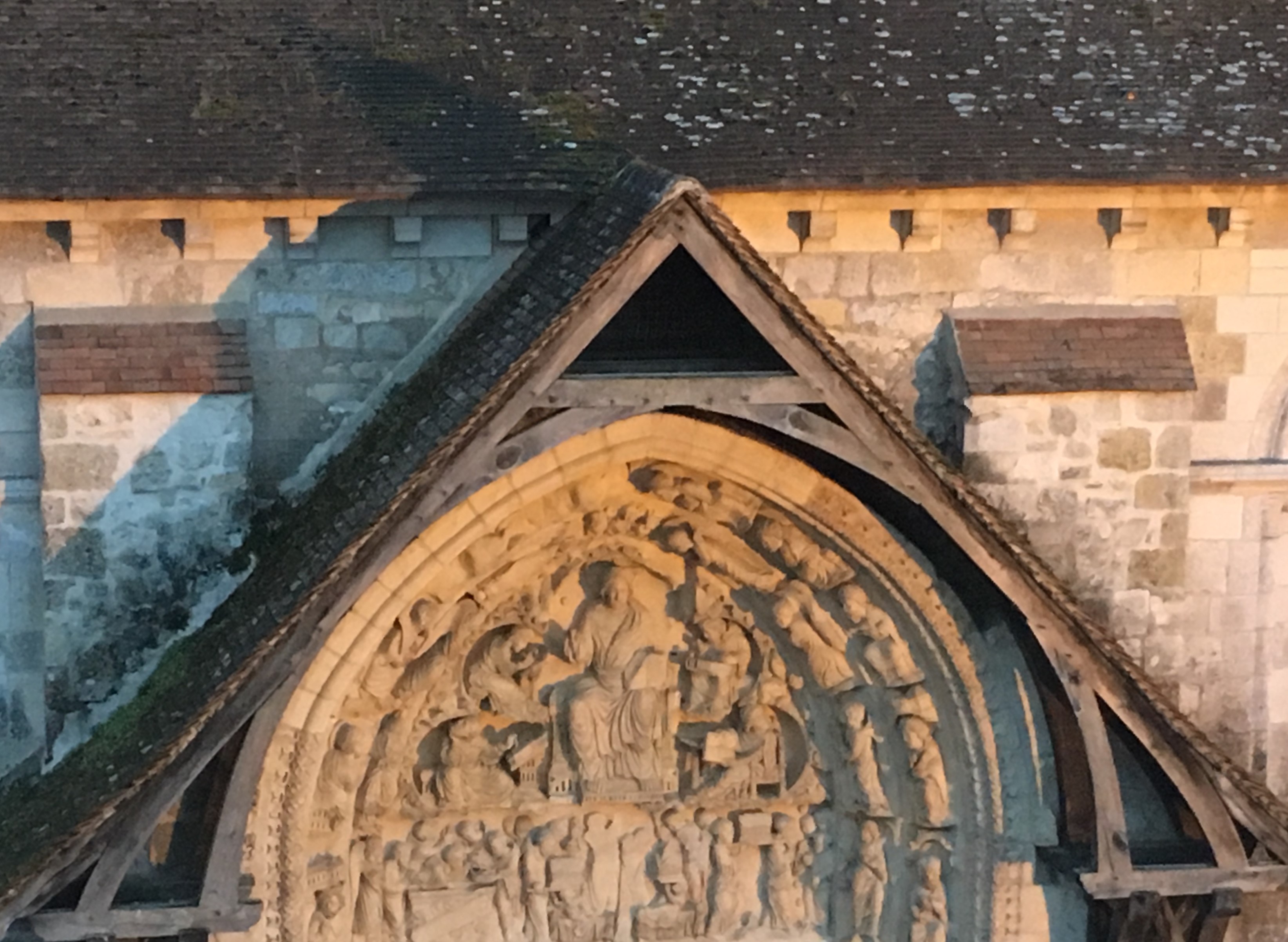
A Confession for All Saints Day

Abbaye de Fleury, photo by Jenn Cavanaugh

In Hebrews 12 we read, “Therefore, since we are surrounded by so great a cloud of witnesses, let us also lay aside every weight and the sin that clings so closely, and let us run with perseverance the race that is set before us, looking to Jesus the pioneer and perfecter of our faith…

As Christians we lay aside those weights and sins in Confession. Please pray with me.

Lord, these saints who have committed their spirits to you encourage us in our daily attempts to commit our lives to you mind, heart, body, and soul. Not every weight we carry is a sin—our responsibilities and pain can weigh us down as well—but God, there are many weights on our minds, hearts, bodies, and souls that keep us from running the race set before us. Lord, we ask that you would use this time to free us.

The weight on our mind we call worry. We have some very real obstacles and hurtles to deal with, God, but the burden of worrying about them is keeping us from approaching them with the energy we need to surmount them. Lord, you said we could give you our cares because you care for us, so now we place our worries in your hands….

The weight on our heart we call grief. Death tolls weigh on us. We have lost people we love. We have lost all kinds of things, God. We have tried to look at this mangled world with your eyes and it’s painful what we see sometimes. God, we have put our hearts into this race, and we have gotten hurt out there. Lord, we give you our hearts in need of healing. Hold us in our grief so we can be brave enough to keep on loving….

Lord, hear now our silent litany of bodily grievances. Set our breaks so we heal stronger. Give us the rest and resultant strength we need to walk in the steps you’ve prepared for us….

The weight on our soul we call sin. These are the things we have done or left undone that bring worry and grief and harm to others. Ways we have not been patient or kind. Ways we have embraced our assigned roles in the unjust systems of our broken world. God, we place our sins and our souls in your hands, asking you remove the one from the other….

We confess we are not perfect, but we look to Jesus, the pioneer and perfecter of our faith, trusting that when we confess our sins, God is faithful and just to forgive those sins and lead us into righteousness. We can get up and walk, we can get up and run because in the name of Jesus Christ, your sins are forgiven. Amen.

Pantoums

Despising the Pain: A Pantoum by Jenn Cavanaugh


I face death every day

For the joy that is set before me.

Dust returns. Death loses the fray –

The happy end begins the story.


For the joy that is set before me

I ride the eternal like a tide.

The happy end begins the story –

We’ll wear our spirits on the outside.


I ride the eternal like a tide,

Dizzied and spun, despising the pain.

We’ll wear our spirits on the outside

For the work that is not in vain.


Dizzied and spun, despising the pain,

Dust returns. Death loses the fray.

For the work that is not in vain

I face death every day.

Poor blog, doomed respository for my second-tier poems. I post this one as an example to accompany yesterday’s Writers Workshop post on the pantoum form, so you can see what you can get out of working in the form in short order. It’s only the third or fourth one I’ve ever written, and the results still feel blocky, compared to writing in unrhymed free verse. If you get something out of the theme or a phrase, I’m glad. Otherwise, this is what a writing exercise looks like!

So far, the best part of writing pantoums is that they practically write themselves – you put a couple of lines together, give them a flick, and you have a perpetual motion poetry machine. For me, they are line-generators. You put a line in, you get a line out, because the form is going to take you there. To write one that stands up as fine poetry, like the one I’ll leave you with here, I will probably have to give up the rhyme, as she did, make my lines more grammatically creative, and incorporate more narrative detail. A pantoum doesn’t have to tell a story, but the ones that appeal to me most suggest one. Do you have a favorite or one of your own to share?

Stillbirth by Laure-Anne Bosselaar


On a platform, I heard someone call out your name:

No, Laetitia, no.

It wasn’t my train—the doors were closing,

but I rushed in, searching for your face.


But no Laetitia. No.

No one in that car could have been you,

but I rushed in, searching for your face:

no longer an infant. A woman now, blond, thirty-two.


No one in that car could have been you.

Laetitia-Marie was the name I had chosen.

No longer an infant. A woman now, blond, thirty-two:

I sometimes go months without remembering you.


Laetitia-Marie was the name I had chosen:

I was told not to look. Not to get attached—

I sometimes go months without remembering you.

Some griefs bless us that way, not asking much space.


I was told not to look. Not to get attached.

It wasn’t my train—the doors were closing.

Some griefs bless us that way, not asking much space.

On a platform, I heard someone calling your name.