Lenten Calendar: Holy Saturday

It happened today on my start screen calendar. I watched it flip from Good Friday directly to Easter (tomorrow), with nary a Holy Saturday in between. One of the earliest Christian heresies was that Jesus didn’t really die. There were variations on the theme — he merely swooned, or he was never so human or incarnate or mortal as to be able to manage it.

To be fair, it really is hard to reconcile the fully God and fully human thing with being fully dead and then fully capable of doing something about it. Go ahead and try for a minute; I’ll wait.

There has been much written on the scandal of the cross, but to a large degree, that’s just human nature and divine nature played out to their fullest. Of course if God shows up to restore justice we’re going to crucify him. And of course God will let us.

What’s truly shocking is the day after that, and the day after that. Death and resurrection are the true scandals. That we could stop the pulse of the one who set the planets in motion. That God would come back to us afterward, promising life abundant.

The church calendar doesn’t skip from Good Friday to Easter. It makes space for a great silence, a deep reckoning and wrestling with the consequences of what we have done. The people in Jesus’s life have followed him, loved him, betrayed him, mocked him, and killed him. And today they mourn him.
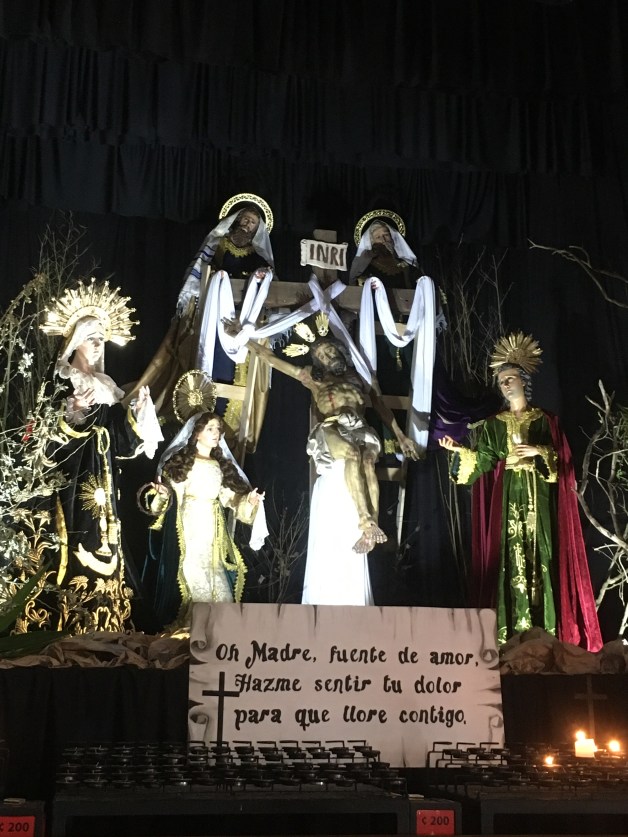
20200310_194606953_iOS

“Oh Mother, fountain of love, cause me to feel your pain, so that I may cry with you.”                                                                                                           photo by Jenn Cavanaugh

This Lent, we have walked together alone through unrelenting cycles of grief and confusion. Today we have been given a day to name and mourn our losses, to feel and so clarify our feelings. Sometimes we only recognize what we truly love for what it truly is when it has been taken away from us.

Your absence has gone through me
Like thread through a needle.
Everything I do is stitched with its color.
— “Separation” by W. S. Merwin

This is a season of apocalypse, not in that the world is ending, but in that one superficial layer of it has been pulled back to reveal another layer of depth. What have you seen that you can’t unsee? Make a note of it, because there will be a temptation to snap out of this weirdness and revert to a version of “reality” that merely glossed over what is real.

We are living in a time in which the old has passed away and new has not yet come. For today, let’s just sit here a spell and reckon with it. We might feel like we’re stuck in Stephen King’s novel The Stand (for which he is, apparently sorry), but it’s a line and image from his Pet Sematary that should stick with us now: “Sometimes, dead is better.” We didn’t go through all of this for that kind of twisted at-all-costs reanimation, did we?

This is the time to sift between the habits we miss because they brought consolation to the world and those that simply made us comfortably numb to it.

It’s okay to grieve the loss of normalcy, to admit that it hurts to give up the things that make us happy. I, for one, should be traveling next week, not making sack lunches for homeless teens with nowhere to be during the day.

Or should I?

This is not the fast we would have chosen, but if we can see it through in the spirit of the fast God chooses, then we and the world will ultimately be better for it.

Yesterday we buried our dead. Today we mourn. Tomorrow we will have the holy task of ushering back to life what is worthy of our love and devotion and co-creating the world anew.
Lenten Calendar: Call to Action

“If you get rid of unfair practices,
    quit blaming victims,
    quit gossiping about other people’s sins,
If you are generous with the hungry
    and start giving yourselves to the down-and-out,
Your lives will begin to glow in the darkness,
    your shadowed lives will be bathed in sunlight.

— Isaiah 58:9-10 (The Message)

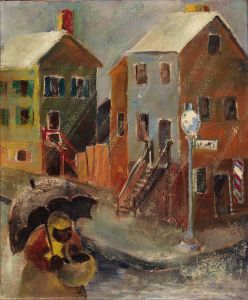
990px-1934_Georgetown_Corner_In_The_Rain Bernice Cross

“Georgetown Corner in the Rain” by Bernice Cross

Harlem Hopscotch

One foot down, then hop! It’s hot.
          Good things for the ones that’s got.
Another jump, now to the left.
          Everybody for hisself.
In the air, now both feet down.
         Since you black, don’t stick around.
Food is gone, the rent is due,
          Curse and cry and then jump two.
All the people out of work,
         Hold for three, then twist and jerk.
Cross the line, they count you out.
          That’s what hopping’s all about.
Both feet flat, the game is done.
They think I lost. I think I won.
— Maya Angelou


It’s the first of the month, and the rent is due.

Economists expect that unemployment this spring will rival that of the Great Depression. More and more of us are part of a gig economy that’s got no gigs right now. It won’t be long before people who were barely getting by can’t manage it alone, while people who have always considered ourselves financially independent will learn how financially interdependent we have always been.

What can you and I do right now to “start giving [y]ourselves to the down-and-out?” The time is right for trying on new ways of “living simply so that others may simply live.”

Organizations are reinventing their service models on a daily basis to keep people in their homes and keep the hungry fed. They probably have a banner on the front page of their website right now inviting you to consider new ways you might fit into making those new models work.

What relationships can we deepen into partnerships of mutual support? What services can you offer? Which of your own needs do you worry you will no longer be provide for yourself? Who can you talk to instead of merely worrying?

How can we direct our buying right now to best support people who use that income to support families? What resources might you have literally lying around taking up space in your confined quarters that would help enliven someone else’s?

Lenten Calendar: Be Food

The Way In

Sometimes the way to milk
     and honey is through the body.

the-spoonful-of-milk-1912.jpg!Large Marc Chagall

The Spoonful of Milk – Marc Chagall


Sometimes the way in is a song.
But there are three ways in
     the world: dangerous, wounding,
and beauty.
To enter stone, be water.
To rise through hard earth, be plant
desiring sunlight, believing in water.
To enter fire, be dry.
To enter life, be food.

— Linda Hogan

Lenten Calendar: Lengthen

Lent comes from the same root as lengthen — as the days are lengthening, as this active fast calls for the lengthening of our souls, the feeding of the hungry and care for others.

If you extend your soul to the hungry
And satisfy the afflicted soul,
Then your light shall dawn in the darkness,
And your darkness shall be as the noonday.
The Lord will guide you continually,
And satisfy your soul in drought,
And strengthen your bones;
You shall be like a watered garden,
And like a spring of water, whose waters do not fail.
Those from among you
Shall build the old waste places;
You shall raise up the foundations of many generations;
And you shall be called the Repairer of the Breach,
The Restorer of Streets to Dwell In.

— Isaiah 58:10-12

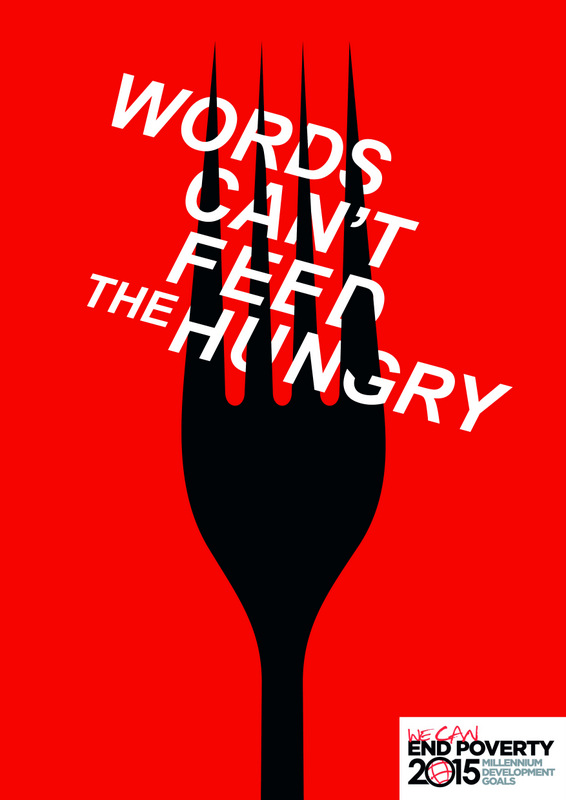
Lent is not about nesting. The nest is made, the eggs have hatched, the child is born, and all these hungry mouths need fed. The focus of this fast is not to eat less, but to “share your bread with the hungry” (Isaiah 58:7). At this time of year, many of us think about how to make do with less, but how will you physically direct the surplus of resources that frees up to those in need?

widelec3

art by Michal Pawlicki

Rather than developing a scarcity mentality, how will you extend yourself to others to demonstrate to them — and yourself — that there is enough?

Lenten Calendar: Another Season, Another Fast

Julie Elfers Winter to Spring

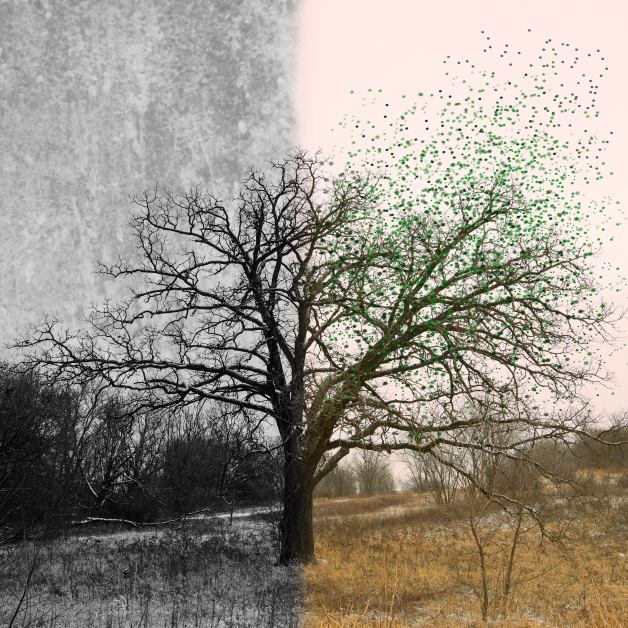
art by Julie Elfers

I’ve blogged a few of years of Advent reflections, but Lent calls for a different kind of pace and energy that I’m just now trying to summon and articulate for the first time.

Both Advent and Lent are fasts, designated times of preparation that allow us to better celebrate the feasts of Christmas and Easter. Both seasons are quiet, but Advent mirrors the deepening stillness of winter’s approach, where Lent channels the subterranean stirrings of early spring.

Advent is lament, crying out in our need and powerlessness as the darkness deepens around us. Lent is repentance, throwing off every self-imposed impediment so we can walk in freedom and power in the light, The discipline of Advent is to cultivate hope in spite of the darkness around us. The discipline of Lent is to spite the darkness within and share the hope that is also within us.

During Advent we meditate on the wonder of God coming to be human as we are: small and vulnerable. During Lent we follow Jesus in his earthly ministry, striving to become human as he is: whole and restoring others to wholeness.

In Advent we fall to our knees in anticipation of a blessing and receive the gift of a savior. In Lent we rise to our feet to be a blessing and learn to give sacrificially in the model of the Savior.

Advent is dwelling on the promise of Isaiah 9:6; it’s a call to wait on the Lord. Lent is embracing the exhortation of Isaiah 58:6; it’s a call to action.

Each of the 40 days of Lent I will try to post a little something to get us moving. A song, a poem, an article, a study, a wandering exploration, a quote…. We’ll see. I have no overarching plan beyond the grand tradition of the disciples – just praying to be able to keep up as Jesus quickens his pace toward Jerusalem.