Lenten Calendar: Cloistered

Does anyone else feel like this Lent has taken an extra poignancy? A great many of us are essentially cloistered, reordering our lives, hyper-aware of the collective significance of our everyday practices, and actively defining what is essential. What would it look like to embrace this worldly detachment as an opportunity for new forms of service and practicing the presence of God?

This passage has also taken on an extra poignancy lately. Good writing does that – rises to the occasion. So may we all as we wait for the Risen One.
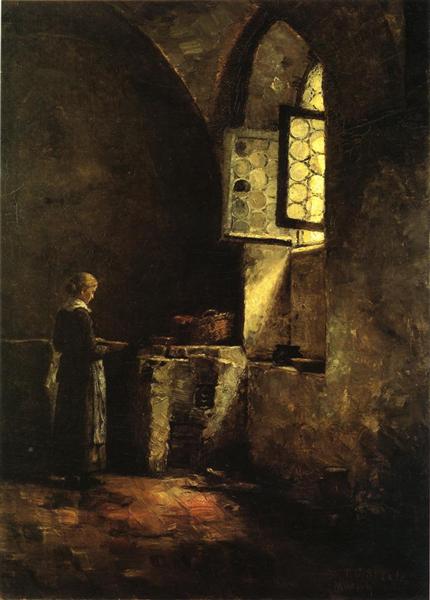
a-corner-in-the-old-kitchen-of-the-mittenheim-cloister-1883 steele

A Corner in the Old Kitchen of the Mittenheim Cloister, 1883 by T.C. Steele

This Wednesday is a long way from Ash Wednesday,
but all our Wednesdays are marked by ashes —
we begin this day with that taste of ash in our mouth:
of failed hope and broken promises,
of forgotten children and frightened women,
we ourselves are ashes to ashes, dust to dust;
we can taste our mortality as we roll the ash around on our tongues.

We are able to ponder our ashness with
some confidence, only because our every Wednesday of ashes
anticipates your Easter victory over that dry, flaky taste of death.

On this Wednesday, we submit our ashen way to you —
you Easter parade of newness.
Before the sun sets, take our Wednesday and Easter us,
Easter us to joy and energy and courage and freedom;
Easter us that we may be fearless for your truth.
Come here and Easter our Wednesday with
mercy and justice and peace and generosity.

We pray as we wait for the Risen One who comes soon.

– from Prayers for a Privileged People by Walter Brueggemann
Lenten Calendar: An Irish Blessing

clover taped to a wall

Photo by Anna Shvets on Pexels.com

That you might be brave in times of trial,
when others lay crosses upon your shoulders.
When mountains must be climbed and chasms are to be crossed;
when hope scarce can shine through.
That every gift God gave you might grow along with you
and let you give the gift of joy to all who care for you.
That you may always have a friend who is worth that name.
whom you can trust, and who helps you in times of sadness.
who will defy the storms of daily life at your side.

– Irish blessing, author unknown; trans. Charles Mitchell

Lenten Calendar: Telling

This week’s lectionary readings play with the conceit of the rock that Moses struck to provide the newly liberated Israelites with fresh “living” water. “Strike the rock,” God says, “and water will come out of it, so that the people may drink.” Moses did so, in the sight of the elders of Israel. He called the place Massah and Meribah, because the Israelites quarreled and tested the LORD, saying, “Is the LORD among us or not?” (Exodus 17:6b-7)

“Is the LORD among us or not?” seems like a perfectly reasonable and non-rhetorical question. Some questions are mysteries to sit with and ponder, invitations to meditation, but this is the kind of question that demands an answer. It’s one that God answers when asked, even when the answer isn’t what the people expected. It’s one that Jesus answers even when he’s not asked. God wants us to know joy in “the rock of our salvation” (Psalm 95:1), and hope “because God’s love has been poured into our hearts” (Romans 5:5), and then to pass on this knowledge. Jesus tells the woman at the well that if she “knew the gift of God” she would have approached him asking for a drink, instead of the other way around (John 4:10). He tells her that this living water will become in those that drink it “a spring of water gushing up to eternal life” (John 4:14). Then he tells her everything she’s ever done and who he is, and she tells everyone else.

She and they and we become springs fed by the source: the rock that was struck.

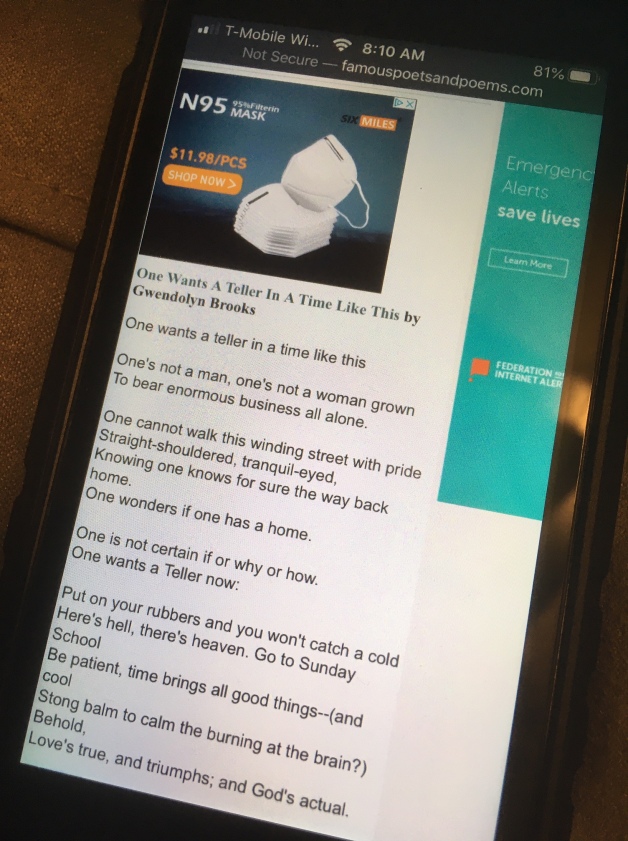
In uncertain times, Gwendolyn Brooks names our desire to just be told what to do to so that everything will be okay. At first the answers given seem equally simplistic. Wear your boots [read: wash your hands!] and you won’t get sick! But then at some point — I’m not sure which point; I imagine it’s subjective by design — the simplistic answers seem to acquire a simple wisdom and move from the immediate to the important, from the actionable to the true and actual.

brooks teller

“One Wants a Teller in a Time Like This” by Gwendolyn Brooks   –  photo by Jenn Cavanaugh

[I couldn’t help but notice that not even the famous poets and poems are secure]


Lenten Calendar: Pilgrimage

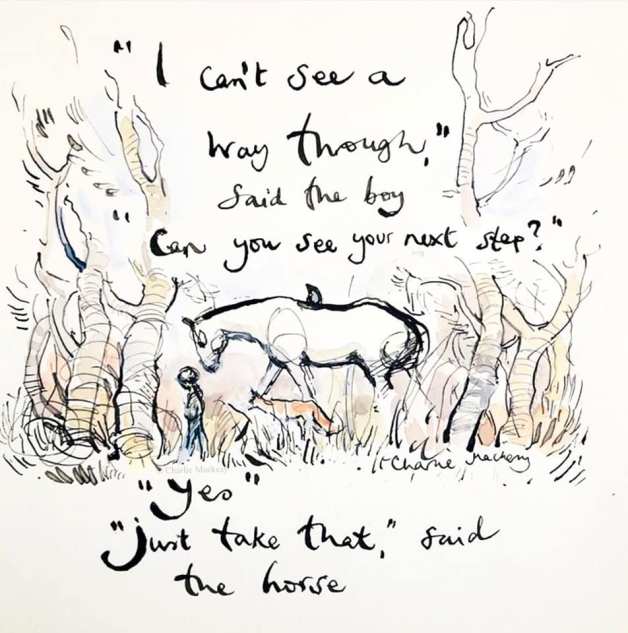
Lent is a time devoted to walking with Jesus to the cross. It is life on the way, on the road, and not always on the straightest path. The journey includes the chance meetings, the unexpected stops, and the improvised detours. Just because you know where you’re going doesn’t mean you know how you’ll get there.

Charlie Mackesy

by Charlie Mackesy

The traveler gives up certain comforts and learns to appreciate others. What are you gaining space for as you leave some things behind?

Perspective is a powerful thing. How is yours changing?

“Mountains have long been a geography for pilgrimage…. Viewing a mountain at a distance or walking around its body we can see its shape, know its profile, survey its surrounds. The closer you come to the mountain the more it disappears, the mountain begins to lose its shape as you near it, its body begins to spread out over the landscape losing itself to itself. On climbing the mountain the mountain continues to vanish. It vanishes in the detail of each step, its crown is buried in space, its body is buried in the breath.” – Joan Halifax


Lenten Calendar: Prayer for Direction

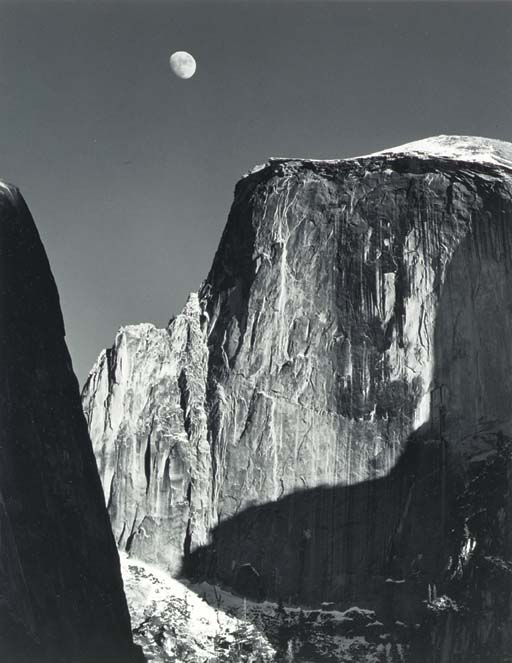
Sit with your uncertainties for a bit. Name them. Acknowledge them. Accept that most of them will still be with you tomorrow and that, in most cases, feeling certain or uncertain about a thing will not significantly affect what tomorrow actually has in store. Pick one concern that could benefit from attention and attend to it: research, seek advice, talk it through with a friend, journal your thoughts, listen, pray…

moon over half dome ansel adams

“Moon over Half Dome” – Ansel Adams

Lent: X

O, teach me to untangle hope
from hope that’s false,
and lead me farther down the winding path
and whatever else

you think I need, because the angle
of the woven slope
of love and grief is steep. Unless the bind
is by design.

— Maurice Manning


Lenten Calendar: Forsaken

Every hour of every day there are crucifixions,

Justice Scales by Emory Douglas

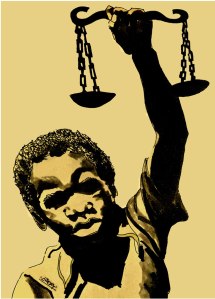
Justice Scales by Emory Douglas

the Christ on trial in someone, somewhere,
judged in fear, condemned in ignorance,
mocked and beaten, imprisoned, killed,
while we watch at the foot of the cross
or from three cock crows away, and ask,
‘God, God, why have you forsaken them?’

The world is full of Good Fridays and Golgothas.
In the small arena of our lives,
there appears to be the same defeat of goodness
and it’s difficult to wear a bright smile
when the heart hangs heavy in a darkness
full of thorns and nails and swords.
Unable to see beyond dyings, we cry,
‘God, God, why have you forsaken us?’

from ‘Easterings’ by Joy Cowley


Justice requires attention and presence. Injustice demands we look or walk away. We sense this when we witness it — if God were only here, we think, this would never happen. Pray for somewhere that seems God-forsaken. Keep your eyes open for ways to shine God’s light in and on dark places.

Lenten Calendar: Confession

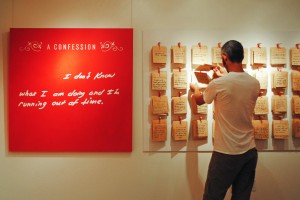
Why and how to reckon with the things on our conscience?

Confessions-Las-Vegas-Running-Out-of-Time-1000x669@2x candy chang

Candy Chang’s traveling project invited people to post anonymous confessions as an opportunity for “catharsis and consolation” http://candychang.com/work/confessions/

To whom and to what end do we confess?

What do we gain and what does it cost us to accept a confession?

What do any of us do with it once it is out there?

It is at once a comfort and a challenge to remember how much we all stand in the need of grace. 

Late Results

We wanted to confess our sins but there were no takers.
—Milosz


And the few willing to listen demanded that we confess on television.
So we kept our sins to ourselves, and they became less troubling.
The halt and the lame arranged to have their hips replaced.
Lepers coated their sores with a neutral foundation, avoided strong light.
The hungry ate at grand buffets and grew huge, though they remained hungry.
Prisoners became indistinguishable from the few who visited them.
Widows remarried and became strangers to their kin.
The orphans finally grew up and learned to fend for themselves.
Even the prophets suspected they were mad, and kept their mouths shut.
Only the poor—who are with us always—only they continued in the hope.

— Scott Cairns


Lenten Calendar: Be Food

The Way In

Sometimes the way to milk
     and honey is through the body.

the-spoonful-of-milk-1912.jpg!Large Marc Chagall

The Spoonful of Milk – Marc Chagall


Sometimes the way in is a song.
But there are three ways in
     the world: dangerous, wounding,
and beauty.
To enter stone, be water.
To rise through hard earth, be plant
desiring sunlight, believing in water.
To enter fire, be dry.
To enter life, be food.

— Linda Hogan

Lenten Calendar: Pray for Peace

Video

Engage in a little audio divina today with Moçnik Damijan’s Ierusalem. Damijan’s text is taken from Psalm 122 – sung in Latin and English – and the names for Jerusalem in multiple languages.

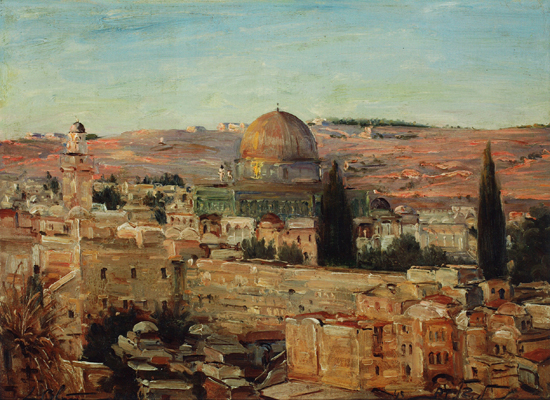
Jerusalem has only rarely, if ever, been a “city of peace,” as its name signifies. It is a prophetic, rather than a descriptive, name. In Luke’s gospel, Jesus “sets his face toward Jerusalem” in chapter 9 and does not arrive until chapter 19; most of his ministry takes place as he journeys toward the cross. Both God and Jesus lament over Jerusalem repeatedly in the Old and New Testament; it represents a place that has a special place in the heart of God, but which has never reached its potential. The prophetic book of Revelation ends in a description of a new “city of peace” in which God’s will is finally done on earth as it is now in heaven.

For what place or city do you feel moved to pray? Pray along with the groans and whispers and cries and melodies of the choir. Pray for its peace and reconciliation and fulfillment and the success of those working to improve the lives of its inhabitants.

blum

Temple Mount and Western Wall by Ludwig Blum

Jerusalem—built as a city
    that is bound firmly together.

Pray for the peace of Jerusalem:

    “May they prosper who love you.
Peace be within your walls,
    and security within your towers.”
For the sake of my relatives and friends
    I will say, “Peace be within you.”
For the sake of the house of the Lord our God,
    I will seek your good.

— Psalm 122:3, 6-9

Lenten Calendar: Unfinished

“So, you’re a background singer in your own life?

Why’re you in the background?

You gotta let the lies go

and let your hope grow.”

Kim B. Miller, “Lies”

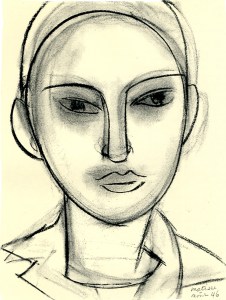
Face (Claude) Henri Matisse

Face (Claude) – Henri Matisse

I find a lot of hope in being unfinished — a work in progress. When things aren’t working out as planned, well, the story isn’t over yet. It helps me extend grace to others, but especially myself — there’s less pressure to be perfect or have it all figured out.

Sometimes I have to ask myself, though, why is that part of my life or myself so underdeveloped? Why is it just roughed in? A sketch I’m in no hurry to finish? What fears and lies are keeping me from committing the time and focus it would take to fill in the features? It’s safer to be all potential, even if that means squandering it, but God has hopes, dreams, plans, and work for our completed selves. What is one step toward that future self you’ve been avoiding for fear of mistakes? What if we accepted the possibility of imperfection along the way to being made perfect?