Into the Labyrinth: The Road to Emmaus

Traditionally, the labyrinth is an uncluttered opportunity for centering prayer. It usually consists of a single path that leads into the center and back out. There are twists and turns, switchbacks, and apparent setbacks that actually take you further along the path to your goal, but feel like moving in the wrong direction. Unlike in a maze – the labyrinth’s choose-your-own-adventure cousin – if you simply walk the path in front of you, you will get where you’re going. Labyrinths are often found outdoors or in relatively bare chapels with an altar and candles that welcome people to come and unburden themselves of whatever they’re carrying, yoke themselves to Christ, and practice walking in the spirit. It is a lovely form of sacred space: simple yet suggestive. The idea presented below is not intended as an improvement over a traditional labyrinth. We borrowed the labyrinth motif because it brought to life the sense of realization while in movement, the walking epiphanies of the story of the disciples meeting Jesus on the road to Emmaus. As such, it would be appropriate to set up during Epiphany or during Lent – when we wander the desert not to lose ourselves, but to find our center – as well as when we did it: during the season of Easter, before Ascension, when this story originally took place.
WP_20141208_17_01_36_Pro__highres (2)

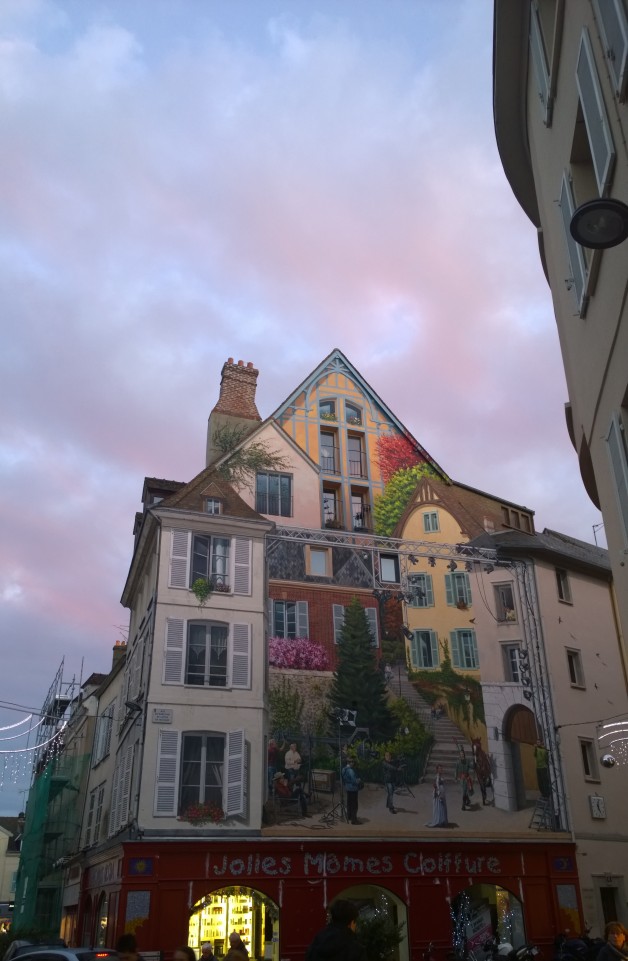
A labyrinth of the everyday – trompe l’oeil outside Chartres Cathedral

Road to Emmaus Labyrinth

Luke 24:13-35

Our[1] labyrinth consisted of a huge drop cloth on the floor marked in a variation on a classic labyrinth pattern.[2] With staggered starts, the labyrinth could accommodate four or five people at a time. We set up eight compact, numbered stations along the path – five going in, one at the center, and two going out.[3] Two readers (one reading the script, the other the scripture passages throughout) recorded an audio tour with music as follows. People were given headphones and a cheap, one-button mp3 player and invited to pause and play and go at their own pace. In this script the numbers correspond to the track number.

  1. “Welcome”

Welcome to the Emmaus Road Labyrinth. Here we enter the story of two disciples meeting the resurrected Jesus as they walked along the road to a town called Emmaus. In a sense, we’ll be walking along with them as we progress into and back out from the heart of the labyrinth. A labyrinth is not a maze. A maze is a puzzle to be solved. A labyrinth is a path to be followed. Walking a labyrinth is a completely different exercise than running a maze. Here there is no fear of being lost. The labyrinth externally enacts the internal experience of centering. Spiritually, it represents space set apart, or sacred space, in which we are drawn into the center, to the recognition of the presence of God, then return to the world blessed and changed by the experience, and better equipped to be an agent of blessing and change.


Each station in the labyrinth has one track on this audio guide. Go at your own pace. This is a time to walk in the Spirit, swap stories with Jesus and listen for the voice of God in your life. If the words or music become a distraction, feel free to pause, skip ahead or ignore the recording entirely. Enter the labyrinth and continue walking until you reach station one.


  1. “Station One (going in): They were kept from recognizing him” Luke 24:13-16

Jesus’ followers then and now have different perceptions of who he is and what he came to do. The disciples’ false perceptions of Jesus kept them from knowing and loving him for who he is. They thought he was a teacher, a revolutionary, a ruler; they thought he was dead.

It is difficult to recognize the presence of God when God doesn’t act according to our assumptions. St. John of the Cross called this the dark night of the soul. He saw it as a time in which, despite all appearances and perceptions, even though it feels like stumbling around in the dark, the soul grows in faith and intimacy with Christ Himself, rather than with illusions of Him.


Open the flaps to see images of the Jesus we think we know. Ask him to reveal himself so that we may love him as he truly is.[4]

Music: “The Dark Night of the Soul” by Loreena McKennitt


  1. “Station Two (going in): Downcast” Luke 24:17

The Seder is the traditional meal and central celebration of Passover. To read about the origins of Passover, please pause this recording and read Exodus 11 & 12 marked in the bibles here. The entire extended family is to come together. Throughout the meal, they retell the Exodus story in the first person as if they had been one of the slaves freed from Pharaoh’s bondage. The bitter herbs, horseradish here, are eaten to remind the participants of the bitterness of slavery.  Are you downcast? Where are you experiencing bitterness? Taste the herbs and let the words of Psalm 22 be your cry to heaven.


  1. “Station Three (going in): Storytelling, Part 1” Luke 24:18-24

The disciples on the road were consoling each other by telling stories and remembering Christ. On index cards, write about a time in your life when you met with God. Pin them to the storyboard. Read others’ stories and allow others to read your story.


  1. “Station Four (going in): Storytelling, Part 2” Luke 24:25-27

Now Jesus tells his story, explaining his work throughout the ages, establishing and re-establishing relationships with his people. Flip through a bible and take some time to hear God’s story of constant provision and love. The lectionary bookmarks and bibles are free for you to take with you.

Music: “Jesus’ Blood Never Failed Me Yet” by Jars of Clay (light) or Gavin Bryars (strong)


  1. “Station Five (going in): Welcoming the Stranger” Luke 24:28-29

The disciples welcomed Jesus though they did not yet recognize him. Who is the stranger walking along the road with you now? Have you ever encountered Christ in or through a stranger? Have you ever been that stranger? Consider these questions as you watch the video.[5] Pause this program and use the headphones attached to the monitor.


  1. “Station Six (center): Breaking Bread” Luke 24:30-31

Here in the center of the labyrinth, Jesus meets us and offers sustenance for the journey outward. Break bread with Christ. Join in this prayer from “Six Recognitions of the Lord” by Mary Oliver as you take and eat.


Oh, feed me this day, Holy Spirit, with

the fragrance of the fields and the

freshness of the oceans which you have

made, and help me to hear and to hold

in all dearness those exacting and wonderful

words of our Lord Christ Jesus, saying:

Follow me.


[minute pause]

When you are ready to begin your journey back out into the world, take a card and exit out the corner opposite from the one you entered. Practice walking prayerfully.


  1. “Station Seven (going out): Burning Hearts” Luke 24:32

What is Christ saying to you on the road? What does scripture say about Jesus? What does it say about you? Have you looked recently to see? Light a candle and pray for the scriptures to be opened to you, for the words to burn within your heart.

[pause]

What words from the scripture cards or from your bible reading do you want burned deeper into your heart? Write them onto a paper heart, tack it to a candle and take it with you. Light it at home, while it burns pray that the scriptures will be opened to you and your heart opened to them.

Music: “Listen” by Michelle Tumes


  1. “Station Eight (going out): Returning to Jerusalem” Luke 24:33-35

Where is your “Jerusalem?” Where will you now return and share what you have experienced? Who can you talk to about what you are learning about Jesus?

Christ is risen! Take a cross to give to a friend as a reminder of Christ the Lord, alive and walking with us.


[1] You know you have a successful collaboration going when no one can remember whose ideas were whose and they’ve become too interwoven to attribute them separately anyway. I got to write the script, but the experience as a whole was thought through and produced by everyone in our alt worship planning group: Cristie Kearny, Deb Hedeen, Judy Naegeli, Trisha Gilmore, Cathy Stevens, Heidi Estey, Kirk Heynen, James Kearny and Anika Smith.

[2] Ours happened to have one path leading in to the center and a different path leading back out, but generally I would recommend the Half-Chartres (basically the inside half of the design at Chartres Cathedral). You can find instructions for making a 12’ x 12’ version at “Karen’s Small Labyrinths” http://www.angelfire.com/my/zelime/labyrinthssmall.html#halfchartres. The size shown there would be sufficient for people to use one or two at a time with a single station in the middle, but wouldn’t accommodate what I’m describing here. Ours was about 4 times that size, maybe 25’ x 25’.

[3] The stations should be clearly numbered with the station number and the track number and labeled “going in” or “going out” so as not to confuse anyone. Remember they are all actually set up on and around a flat, open surface, so they will not be laid down linearly. If you use a single path labyrinth, people will be walking by stations 7 and 8 on the way in, but should only stop at them on the way out. We set up stations on small, low tables and music stands so they wouldn’t pose as obstacles by taking up too much space. Café tables would work nicely for the stations you can place around the outside of the circuit. Ideally, if someone’s standing at a station, another person should be able to pass them without stepping completely off the path.

[4] Our artists made this interactive piece. You can create your own by making a collage poster of images of Jesus or roles people think of Jesus playing: the miracle worker, the rustic shepherd, the white-suited televangelist, the revolutionary in a beret, the pacifist at a sit-in, etc. Then overlay the poster with another piece of poster board and cut flaps in it that open onto the various images.

[5] We commissioned a videographer and a high school student in our congregation to collaborate on a video of different kinds of people. You could make your own using stills of people in your church and neighborhood or footage from mission trips. Or you could download something along the lines of The Work of the People’s “Stranger” (http://www.theworkofthepeople.com/index.php?ct=store.details&pid=V00520) or LifesongMD’s “World Faces” (http://youtu.be/z6RLHKRs9D8).

Advent Again – day 20

Who am I.. that you have brought me thus far?

cubist-self-portrait-dali

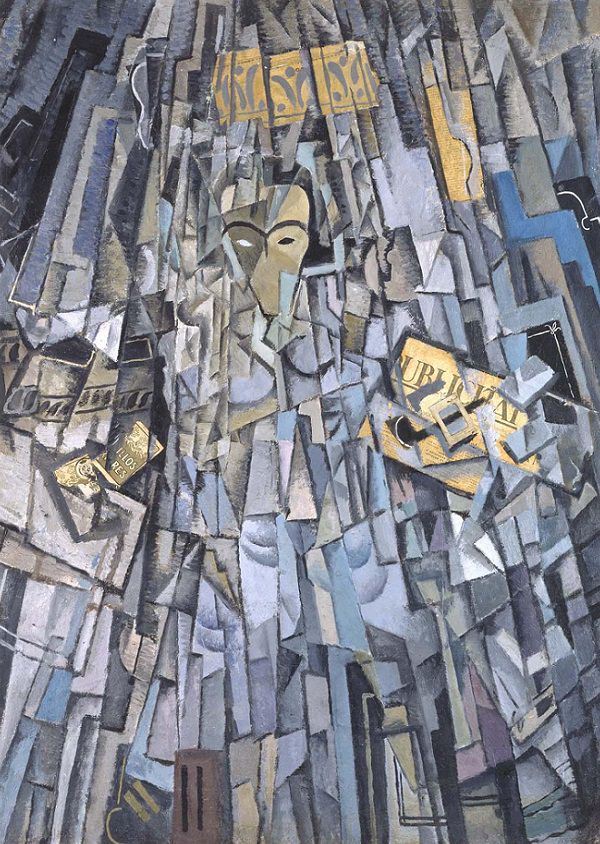
Cubist Self-Portrait (1923) by Salvador Dali

from “Who Understands Me But Me?” by Jimmy Santiago Baca

I cannot fly or make something appear in my hand,
I cannot make the heavens open or the earth tremble,
I can live with myself, and I am amazed at myself, my love,
my beauty,
I am taken by my failures, astounded by my fears,
I am stubborn and childish,
in the midst of this wreckage of life they incurred,
I practice being myself,
and I have found parts of myself never dreamed of by me,
they were goaded out from under rocks in my heart
when the walls were built higher,
when the water was turned off and the windows painted black.
I followed these signs
like an old tracker and followed the tracks deep into myself,
followed the blood-spotted path,
deeper into dangerous regions, and found so many parts of myself,
who taught me water is not everything,
and gave me new eyes to see through walls,
and when they spoke, sunlight came out of their mouths,
and I was laughing at me with them,
we laughed like children and made pacts to always be loyal,
who understands me when I say this is beautiful?

Advent Again – day 16

On that day the deaf shall hear
    the words of a scroll,
and out of their gloom and darkness
    the eyes of the blind shall see. – Isaiah 29:18

dark-sea-dave-anderson

“Dark Sea” by Dave Anderson http://clampart.com/2012/04/dark-sea/dark-sea/

from “Song for the Last Act” by Louise Bogan

Now that I have your voice by heart, I read
In the black chords upon a dulling page
Music that is not meant for music’s cage,
Whose emblems mix with words that shake and bleed.
The staves are shuttled over with a stark
Unprinted silence. In a double dream
I must spell out the storm, the running stream.
The beat’s too swift. The notes shift in the dark.

Now that I have your voice by heart, I read.

Now that I have your heart by heart, I see
The wharves with their great ships and architraves;
The rigging and the cargo and the slaves
On a strange beach under a broken sky.
O not departure, but a voyage done!
The bales stand on the stone; the anchor weeps
Its red rust downward, and the long vine creeps
Beside the salt herb, in the lengthening sun.

Now that I have your heart by heart, I see.

Advent Again – day 4

“The word is very near to you…”

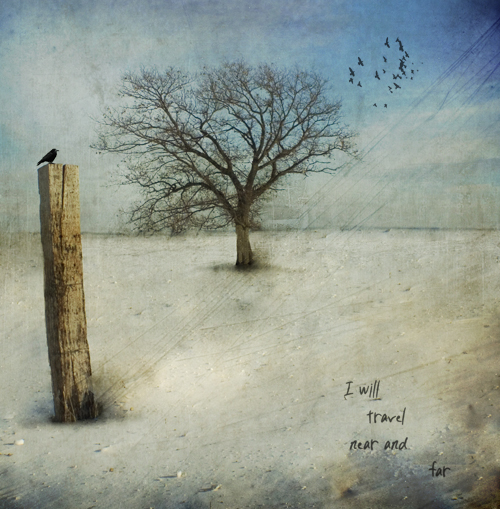
near-and-far

“Near and Far” by Jamie Heiden

“Nothing is Far” by Robert Francis

Though I have never caught the word
Of God from any calling bird,
I hear all that the ancients heard.
Though I have seen no deity
Enter or leave a twilit tree,
I see all that the seers see.
A common stone can still reveal
Something not stone, not seen, yet real.
What may a common stone conceal?
Nothing is far that once was near.
Nothing is hid that once was clear.
Nothing was God that is not here.
Here is the bird, the tree, the stone.
Here in the sun I sit alone
Between the known and the unknown.

Advent Again – Day 3

What are you waiting for?

from “I Am Waiting” by Lawrence Ferlinghetti

I am waiting for the Great Divide to be crossed

and I am anxiously waiting

for the secret of eternal life to be discovered

by an obscure general practitioner

and I am waiting

for the storms of life

to be over

and I am waiting

to set sail for happiness

and I am waiting

for a reconstructed Mayflower

to reach America

with its picture story and tv rights

sold in advance to the natives

and I am waiting

for the lost music to sound again

in the Lost Continent

in a new rebirth of wonder


I am waiting for the day

that maketh all things clear

and I am awaiting retribution

for what America did

to Tom Sawyer

and I am waiting

for Alice in Wonderland

to retransmit to me

her total dream of innocence

and I am waiting

for Childe Roland to come

to the final darkest tower

and I am waiting

for Aphrodite

to grow live arms

at a final disarmament conference

in a new rebirth of wonder


I am waiting

to get some intimations

of immortality

by recollecting my early childhood

and I am waiting

for the green mornings to come again

youth’s dumb green fields come back again

and I am waiting

for some strains of unpremeditated art

to shake my typewriter

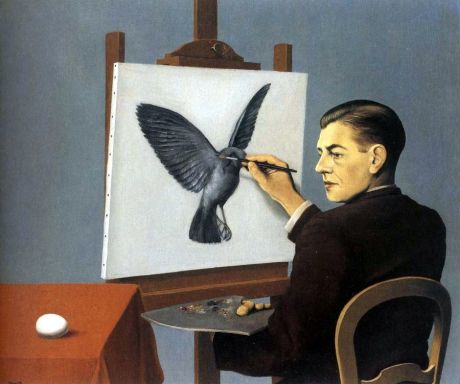
magritte-la-clairvoyance

“La Clairvoyance” by René Magritte


and I am waiting to write

the great indelible poem

and I am waiting

for the last long careless rapture

and I am perpetually waiting

for the fleeing lovers on the Grecian Urn

to catch each other up at last

and embrace

and I am awaiting

perpetually and forever

a renaissance of wonder

Advent Again – Day 2

“When did we see you…?”

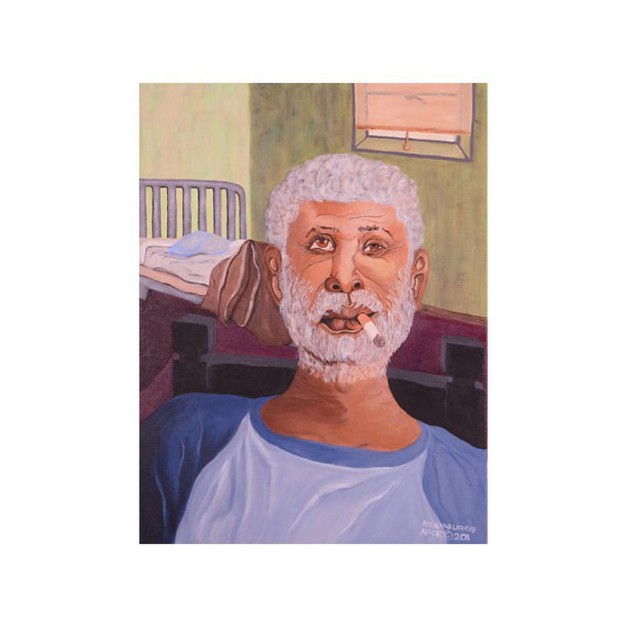
lafayeoldbrokeandalone

Old, Broke and Alone” by Adrienne La Faye


A long time ago, I took a walk down a street in Harlem in New York City. I came upon a man who asked me for a dollar. He had asked a few other people before me, but they only passed him by without glancing his way. I stopped and handed the man some money. As I began to turn away, he reached out and shook my hand. He looked me in the eyes and said, “I will bless you.” Now, I’m not saying that was God Himself. But how do we know that it wasn’t someone working for him, walking around in disguise, just to see what we would do?

MUHAMMAD ALI, The Soul of a Butterfly

Epiphanies Part 2: …And Where It Settles

Click here for Part 1.

Epiphanies have to do with seeing, in the deepest sense. A spotlight comes on and shines on something that has been there all along and, as if for the first time, we truly see it. The work of the artist is to train one’s eyes to see and communicate it such a way that others see it as well, to witness and bear witness. Flannery O’Connor wrote, “Your beliefs will be the light by which you see, but they will not be what you see and they will not be a substitute for seeing.” We require light to see, which is why light is a primary metaphor for describing epiphanies: realizations come to light, connections are illuminated, and so on. Following Christ in the world depends heavily on having eyes to see and ears to hear. Artists have a particular calling to make what they see visible to others, but we are all called to live as witnesses – to see and hear and make what sense we can of God’s presence, action, and guidance – and to respond accordingly.

A quiet consensus has formed in this show – that the light by which we see enters through the cracks and crevices and that it settles, well, just about everywhere, really – everywhere we have trained our eyes to see and taken the time to look. Poet Mike McGeehon sees the light settling in the enforced pause of disparate souls at a stoplight.

In all of us here

in the 40-second meeting,

settling into our seats

for a moment together

where the intersection is.

– from “Where the Light Settles”

by Mike McGeehon

Photographer Leslie A. Zukor has a theophany by the natural light of the natural world

"The Burning Bush" by Leslie A. Zukor

“The Burning Bush” by Leslie A. Zukor

while Ron Simmons digitally enhances his photographs to reveal the prismatic refractions surrounding saints making visible all the colors hidden in the light itself.

"Apparitions" by Ron Simmons

“Apparitions” by Ron Simmons

Alison Peacock sees a heavenly father in the earthly. The young Seeker in my poem and in the beautiful collage Trisha Gilmore created for her knows God’s presence before she can articulate it in

the cheek-roughness… of this… tree I can’t name… but… I will someday

– from “Seeker” by Jenn Cavanaugh

in Mars Hill Review 22 (2003)

Autumn Kegley paints her revelling revelation of the joy-filled life. Karla Manus encounters such a life and sees her relatively comfortable, joyless self in stark relief. Elizabeth W. Noyes returns again and again to the return of the full moon in which she catches sight of “infinite possibilities for echoing what is poetic, magical, mysterious and whole in the human heart, and mine.”

In curating this show, I’ve recovered a season. Between the times in which we wait for God to come and prepare for God to act, we have been given a time to train our senses to recognizing God’s presence and present work among us. In the years to come, Epiphany will be for me a time to focus on seeing God in the world, recognizing Christ in others, and becoming more receptive to the connections the Spirit makes.

The Epiphanies group show will be open at Capitol Hill Presbyterian Church of Seattle until February 14th. You can call the church office to make an appointment to see it during a weekday, join us for a service: Sunday, 2/10 @ 9:45 am or Ash Wednesday, 2/13 @ 7 pm, or drop by during the Capitol Hill Arts Walk, 5-8 pm, 2/14. See our Facebook page for more information and pictures http://www.facebook.com/CapHillPresArts

Liturgical (and Affordable!) Art

Liturgical (and Affordable!) Art.

After my own heart

Epiphanies Part I: How the Light Gets in…

About twice a year our church’s arts group plans a themed group show. We identify a theme that corresponds to an upcoming liturgical season or sermon series, send out a call for submissions, offer prizes so modest they hesitate to call themselves that, and work with what comes in. If you’re looking for a creative faith-building exercise, I recommend the practice.

Our current show is “Epiphanies,” in which eleven artists and poets reflect on those a-ha moments of connection, recognition, realization, and revelation. Now that it’s all put together, though, a secondary theme seems to be emerging: Cracks. The chorus of Leonard Cohen’s “Anthem” runs

Ring the bells that still can ring
Forget your perfect offering
There is a crack in everything
That’s how the light gets in.

For me this show has become about how the Light gets in and where it settles. Cohen’s chorus has long been a favorite of mine and our friend Matt Whitney alluded to it while he was installing his piece which uses the various textures of sidewalk cracks to form a received word.

"Clairvoyance" by Matthew Whitney

“Clairvoyance” by Matthew Whitney

Next to it we posted a poem of mine in which the tears and fissures that threaten our faith become themselves a source of hope.

                Miss Vera Speaks
They ask how she grin through that face with that life.
I say I’s never shielded from nothing
‘Cept dying young.


People deep bruised by something
Talk like the world should end.
Won’t catch me dying every day like that.


‘Cause I seen them once
Just once – the cracks in the universe –
Thought I’d fall right through.


‘Stead I laughed – said some kind of God
Put up with a tattered-old place as here
Gotta have some grace for me.
 –      Jenn Cavanaugh
(originally published in America Magazine in 2007)

When it comes to hanging these shows, we often find ourselves strategizing about how best to disguise the myriad holes, blemishes, and outright failings in sanctuary plaster. At the artist reception on Sunday I was joking about how the condition of the walls was starting to inform our artistic decisions overmuch, and a few of us got looking at this tableau:

Noyes Epiphanies Cracks

Photo by Elizabeth W. Noyes. “She Crawled Like You Out of the Wreckage” by Carrie Redway. “Swarm” by Robroy Chalmers. “Wall” by Church + Use + Time

This patch of wall we’re usually so anxious to conceal became part of this piece by Carrie Redway about the Fall and Eve’s anguished banishment from Eden and of the permanent installation by Robroy Chalmers that speaks to our congregation so eloquently and wordlessly of the Spirit’s movement in our midst. Our church building has been in continuous use since 1923. That wall has come by its imperfection honestly. Why hide it? Why not let it inform our artistic decisions?

More next week…